
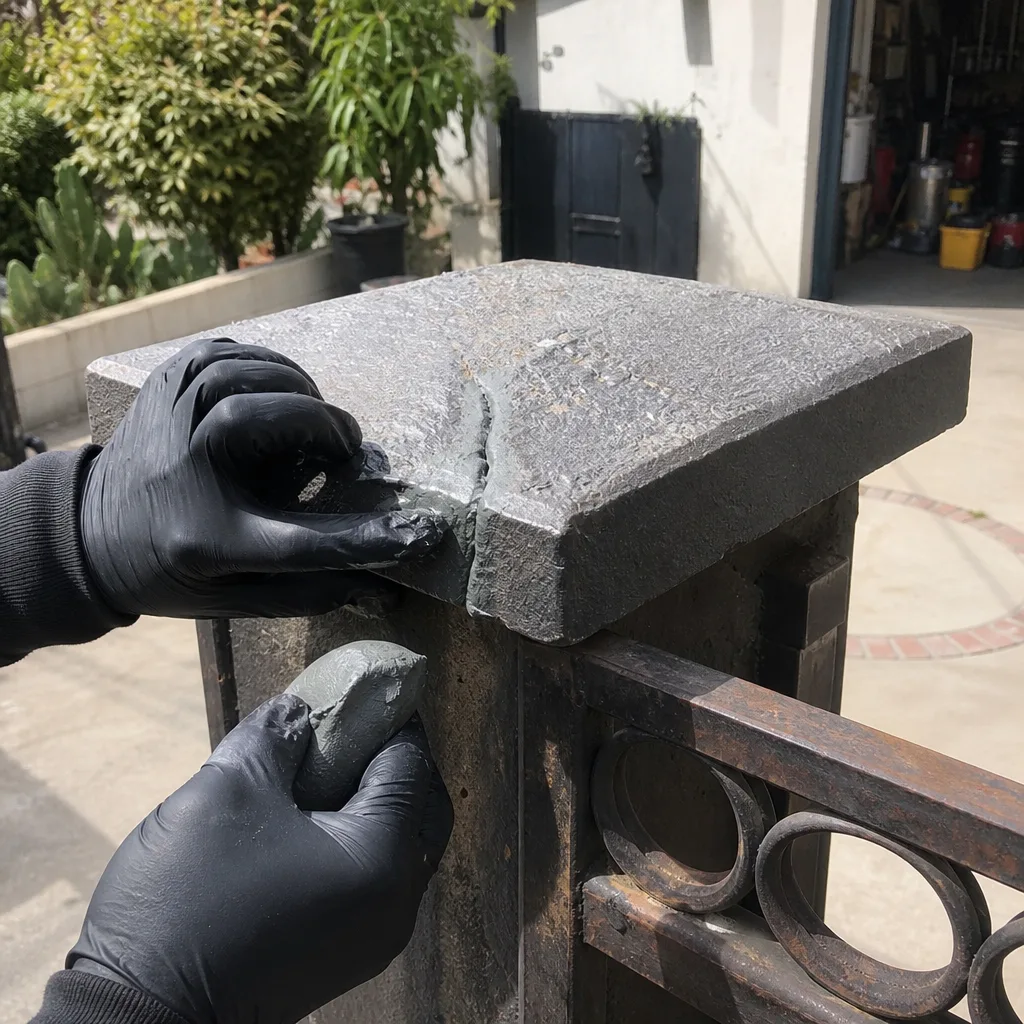
Last updated November 5, 2026
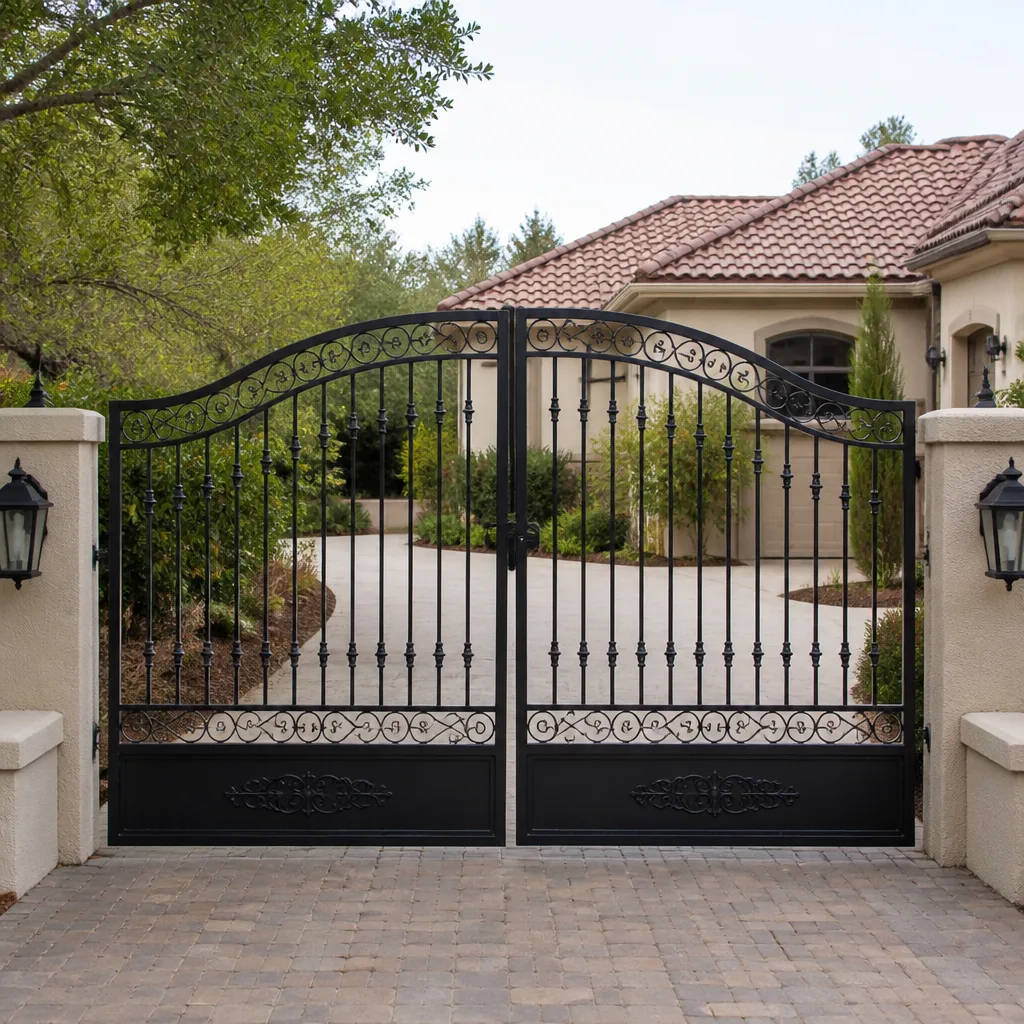 Wrought iron
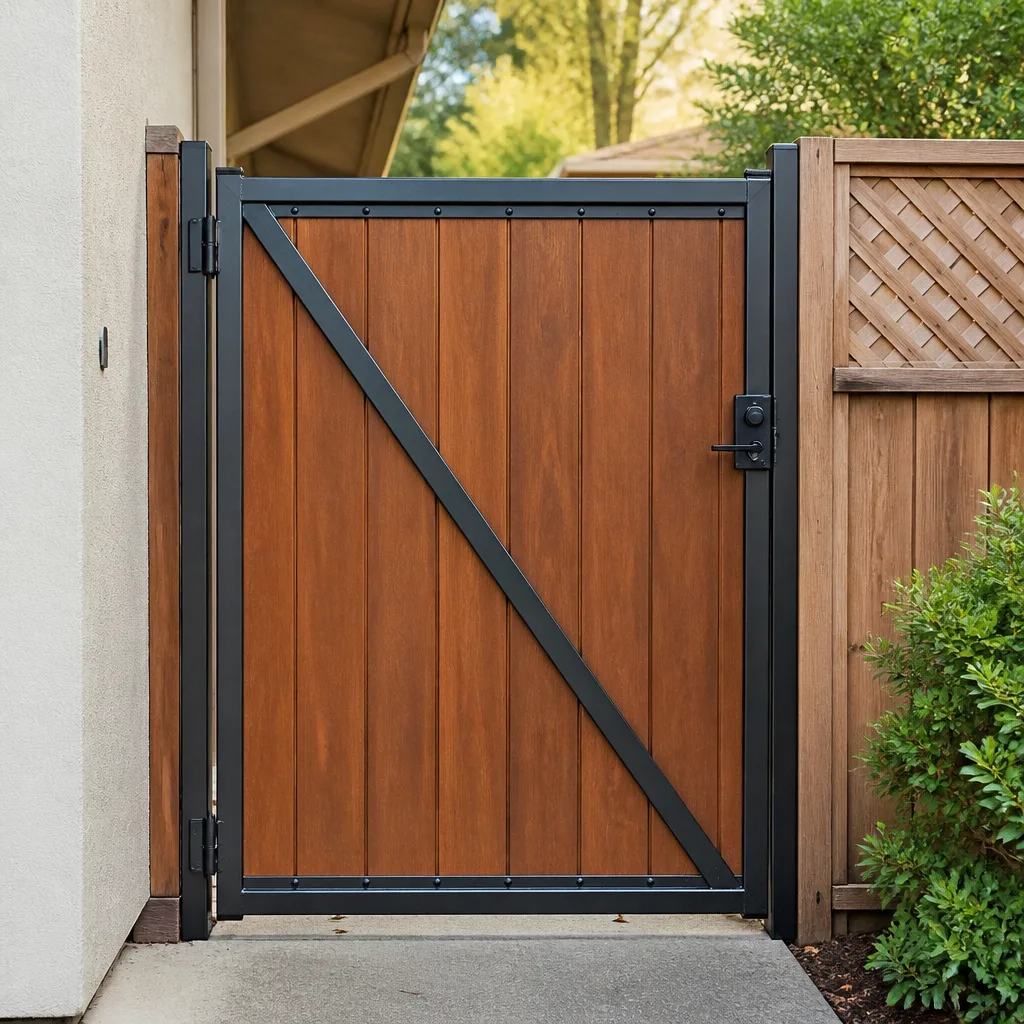 Wood & steel frame
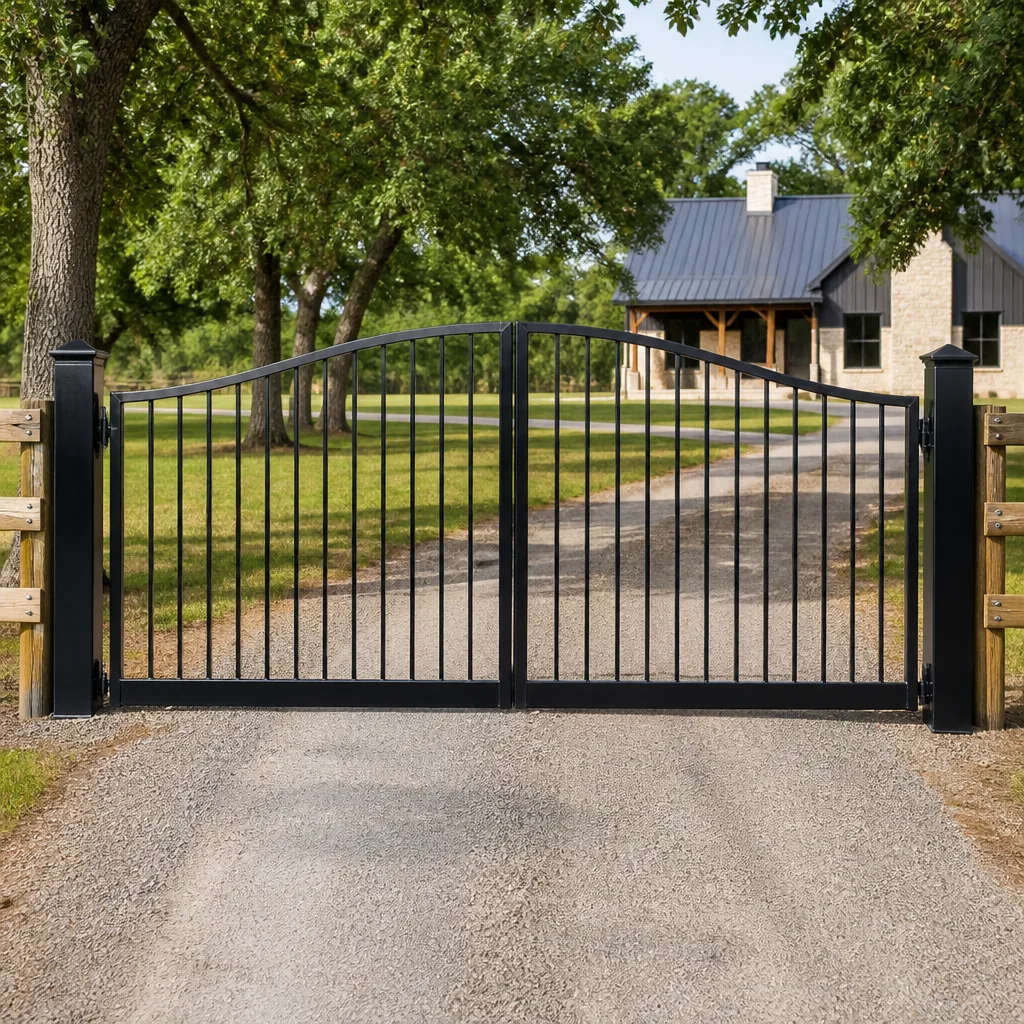 Farm & ranch
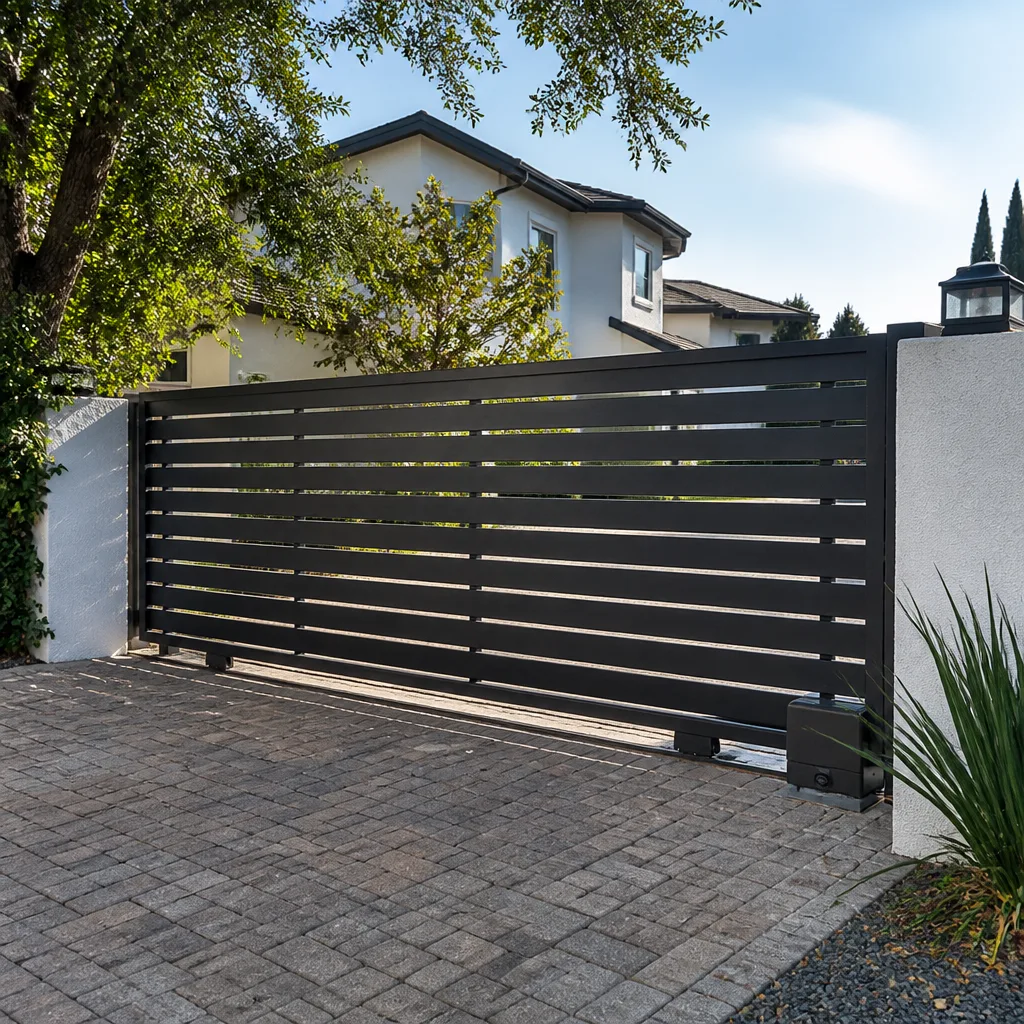 Sliding driveway gates
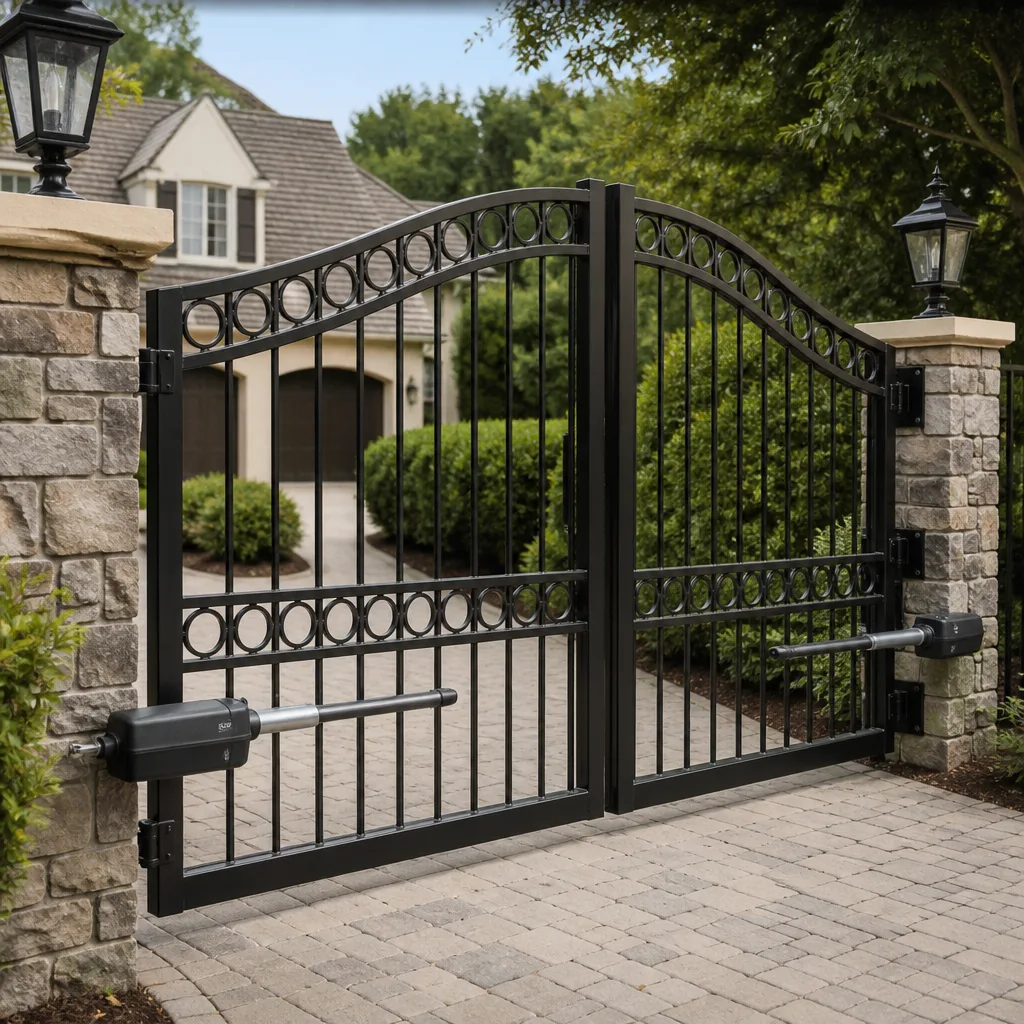 LiftMaster operators
Free on-site gate assessment - hinges, posts, and your LiftMaster or Nice gate operator checked before anything is quoted
The assessment is free and the quote is the invoice.
Get your free estimateGate Repair Warning Signs: An Atwater Village Homeowner’s Reference Guide
A gate that hesitates for two seconds before moving isn’t ‘being slow’ – that’s a capacitor beginning to fail, and you have roughly 60 to 90 operating cycles before it stops moving entirely, usually at the worst possible time. Most Atwater Village homeowners don’t notice the early warning signs because they’re subtle: a faint grinding noise, a remote that needs a second click, a gate that opens 90% of the way and calls it good. This guide teaches you to read those symptoms the way a technician does, before a minor adjustment becomes a full motor replacement.
Quick Answer
Gate failure almost always announces itself through one of twelve specific behaviors: grinding, partial travel, remote range drop, error codes, sagging panels, and jerky movement are the most common. In Atwater Village, where many homes have automatic driveway gates on compact lots, catching these signs early typically means a $90 – $250 repair instead of a $900 – $2,500 operator or panel replacement. The single most useful skill is learning which symptoms are safe to observe and document versus which mean you should stop using the gate immediately.
Styles & brands we work with
- Wrought iron
- Wood & steel frame
- Farm & ranch
- Sliding driveway gates
- LiftMaster operators
Table of Contents
- Why a Grinding Gate Never Fixes Itself
- Remote Range Dropping? The Problem Is Rarely the Battery
- Partial Opening and the Difference Between Failing and Misadjusted
- Operator Error Codes: What That Blinking Light Actually Means
- Visual Inspection Points Most Homeowners Never Check
- DIY-Adjustable vs. Stop-Using-This-Gate Safety Issues
- How Atwater Village Conditions Affect Gate Components
- Landscape, Irrigation, and the Gate You Didn’t Think About
Why a Grinding Gate Never Fixes Itself
Grinding has a specific cause every single time: metal is moving against metal in a way it wasn’t designed to. On a slide gate in Atwater Village, the most common source is a roller bearing that has lost its seal, letting grit from the driveway work its way into the bearing race. On a swing gate, grinding typically comes from a hinge that has worn past its tolerance, causing the gate leaf to drop slightly and drag its bottom corner against the concrete or decomposed granite path. Neither condition improves with use. Both get worse every cycle.
Here’s what our technicians listen for when a customer describes a grinding gate:
- Continuous grind while moving: almost always a roller, hinge, or track issue. The sound will change pitch as the gate moves through its arc, which tells you which side of the gate is carrying too much load.
- Grind only at the very start or very end of travel: often a limit switch misalignment or a stop post that has shifted. The operator is pressing the gate against something it shouldn’t be.
- Grind accompanied by visible metal dust or shavings: this is urgent. A component is actively wearing away, and each cycle removes measurable material.
- Intermittent grind, sometimes silent: a bearing or wheel that catches only in certain positions. Many Atwater Village gates with this symptom have one specific spot in the travel where the sound appears, which is diagnostic gold when you can name it.
Never lubricate a grinding gate as a first response. Grease on a worn bearing temporarily quietens the noise while the underlying damage accelerates, because the lubrication gives the homeowner a false sense of resolution. By the time the sound returns, the bearing has often scored its race and the repair cost has tripled. A grinding sound is information. Use it while it’s still telling you something specific.
Remote Range Dropping? The Problem Is Rarely the Battery
When a homeowner in Atwater Village notices their gate remote only works from ten feet away instead of thirty, the instinct is to swap the battery. That’s reasonable, and we encourage it as a first step because it’s cheap and takes thirty seconds. But if the range doesn’t recover with a fresh battery, the issue is almost always in the receiver or the antenna, not the remote itself. Here’s the pattern we see most often.
Gate operators have a receiver module that interprets the signal from your remote. On LiftMaster and Linear systems, the receiver antenna is a thin wire that should hang straight and clear of the metal control box. When that wire gets bent, pinched behind the circuit board, or tucked against the steel housing, the effective range can drop by 70% or more. The fix is a five-minute adjustment. The cost is minimal. The problem looks identical to a failing remote because the symptoms are the same: you have to be closer and closer for the gate to respond.
Other causes of remote range drop we diagnose regularly:
- Antenna fatigue: the wire has been bent too many times and has fractured internally. It looks fine from outside but carries only a fraction of the signal.
- Receiver module drift: Viking and FAAC receivers, particularly on units installed more than a few years ago, can drift off frequency slightly. The remote still transmits, but the receiver is listening on a slightly different frequency.
- Interference: this is increasingly common in Atwater Village as homes add more wireless devices. LED bulbs, Wi-Fi mesh systems, security cameras, and smart home hubs can all crowd the 300 – 433 MHz band that many gate remotes use. A remote that works flawlessly all day but fails after a neighbor installs new landscape lighting is often fighting interference.
- Battery contact corrosion: not the battery itself, but the little metal tabs inside the remote. A decade of humidity and use wears them down until the power is intermittent.
The quickest diagnostic is to test a second remote. If both remotes have the same range problem, the issue is on the receiver side. If one works and one doesn’t, it’s the remote. Either way, a gate that only responds from five feet away is telling you something about the operator, not just the handheld.
Partial Opening and the Difference Between Failing and Misadjusted
A gate that opens 80% of the way and stops is one of the most common calls we get from Atwater Village homeowners, and it’s also one of the most commonly misdiagnosed. Here’s the distinction that matters: a gate that fails to reach its set limit because the motor is struggling is a mechanical problem. A gate that reaches its set limit but that limit is wrong is an adjustment problem. Both look identical from the driveway. They require opposite responses.
A misadjusted limit is the good scenario. The operator’s open-limit and close-limit settings control where the motor thinks the gate should stop. If those settings were never properly calibrated, or if the gate was installed by someone who approximated the travel, the gate will stop short every time. The fix is a reprogramming of the limit switches, which on most LiftMaster, Mighty Mule, and Elite operators takes about twenty minutes. This is one of the few adjustments a technically inclined homeowner can do with the manual and some patience, though the manual for your specific model matters more than general advice.
A struggling motor is the expensive scenario, and its symptoms are subtly different. Listen for these distinctions:
- Gate labors near the end of travel: the motor audibly changes pitch, like it’s working harder. This suggests the gate is binding somewhere, usually at the point where it slows before stopping.
- Gate slows before reaching the limit, then stops: a motor that is losing torque due to a failing capacitor or worn gearbox will often behave like this. The operator thinks it’s still running, but the motor physically can’t push the gate further.
- Gate opens to a different point each time: this is a serious warning. Mechanical wear in the drive mechanism or a failing electronic component is preventing the operator from achieving consistent positioning.
- Gate reverses or re-opens after reaching what should be the close limit: this is often an obstruction sensor issue, not a limit problem. The safety circuit is doing its job, and you need to find what’s triggering it.
If you’ve already guessed which of these you’re dealing with, call an electric gate repair specialist. Bringing in a technician early when a motor is laboring is what prevents a $250 diagnosis from becoming a $2,000 operator replacement.
Operator Error Codes: What That Blinking Light Actually Means
Every major gate operator brand used in Atwater Village has a diagnostic system built in, and most of them communicate through the same mechanism: a blinking light on the control board. The number of blinks, the pattern, and the color all mean something specific. Here’s what the most common patterns indicate on the brands we work on regularly.
LiftMaster and Elite error code patterns
LiftMaster and Elite share a parent company, and their diagnostic logic is similar. A single blink, pause, single blink pattern commonly indicates an obstruction in the safety circuit. Two blinks often points to a limit switch issue. Three blinks means the operator’s internal thermal protection has tripped, which happens when the motor is working against excessive resistance or has run too many cycles in a short window. If you see three blinks on a warm Atwater Village afternoon, stop cycling the gate and let it cool. If the pattern returns after cooling, the motor is drawing more current than it should, and something is binding.
Mighty Mule error indications
Mighty Mule operators use a series of beeps and light codes. A common pattern is a continuous beep when the gate is in motion, which is actually a normal “gate moving” alert on some models. What you don’t want is a repeated three-beep pattern when the gate isn’t moving, which typically signals a sensor or control input fault. On the MM series, the light on the control board blinking in sets of four often indicates a battery or power supply issue, especially on the solar-capable models.
FAAC and Viking diagnostics
FAAC uses a blinking LED on the control board with different flash rates for different faults. A steady rapid blink often means the operator has detected a fault in its own programming. Viking operators are more explicit: their display panels on newer models sometimes show a numeric code, with codes in the 30s and 40s typically pointing to motor and limit issues. Not sure what your code means? A gate repair technician can decode it in minutes, but having the pattern written down when they arrive saves a service trip.
Visual Inspection Points Most Homeowners Never Check
Most Atwater Village homeowners walk past their gate a hundred times a month without ever looking at it. Here are the five visual inspection points that catch most problems early, and what each one reveals.
- Hinge wear indicators: on a swing gate, look at the gap between the gate leaf and the hinge post. If that gap narrows at the top and widens at the bottom, the hinge pins are wearing and the gate is sagging. If you see shiny metal where the gate frame meets the hinge, the gate is scraping against something it never used to touch.
- Weld stress fractures at corners: every gate frame has welded corners. Hairline cracks in the weld bead or the powder coat, especially at the bottom corners of a gate leaf, are early indicators of metal fatigue. A crack that hasn’t spread through the tube yet can often be re-welded. A crack that has propagated means the tube itself is compromised.
- Loop wire surface breaks: underground loop detectors, which tell the gate to open when a car pulls up, use a continuous wire loop buried in the driveway. Sometimes the wire works its way up through the pavement surface. If you can see any part of the loop wire above ground, it’s being abraded by tires and will eventually break. A broken loop is one of the most frustrating failures because the gate opens fine from a remote but never “sees” your car.
- Operator cover seal condition: the plastic or metal housing that protects your operator’s electronics has a gasket or seal. In the Atwater Village climate, where the air is dry most of the year, that seal can crack and shrink. A compromised seal lets in dust, spider webs, and eventually moisture, which is the enemy of circuit boards. Check the perimeter of the cover for cracks or gaps.
- Track alignment on slide gates: for slide gates, get down at track level and look along the length of the track. A track that has spread, shifted, or collected debris at one end will show as uneven wear on the gate’s rollers. If one roller looks shinier than the others, it’s carrying more load than it should.
DIY-Adjustable vs. Stop-Using-This-Gate Safety Issues
A gate that annoys you and a gate that could hurt someone are different categories, and telling them apart is the most important judgment in this guide. Here’s how we separate them.
Things a careful homeowner can often address: a remote that needs reprogramming to the receiver, a loose manual release handle, a misaligned safety sensor that needs re-aiming, a limit setting that’s drifted slightly, and a dead remote battery. These are adjustments, not repairs, and the gate is still operating safely while you address them.
Things that mean you should stop using the gate immediately: a gate that reverses direction on its own mid-travel, a gate that drops suddenly when you disengage the manual release, a gate that sparks or burns or smells electrical when the operator runs, a gate that has come off its track, and a swing gate that sags enough to drag on the ground. These are not annoyances. A slide gate that leaves its track can fall outward. A swing gate with a worn hinge can suddenly shift its weight. And any electrical burning smell is a potential fire or shock hazard. Turn off the operator’s power, padlock the gate if you can, and call a licensed Gate Repair Atwater Village technician. These are the moments when waiting costs more than money.
How Atwater Village Conditions Affect Gate Components
Atwater Village has a specific climate profile, and it impacts gate hardware in ways that surprise homeowners who assume all of Los Angeles is the same. The hot, dry summers and mild winters mean that the primary environmental stresses on a gate are heat, UV exposure, dust, and occasional heavy rain – not cold, not ice, and not coastal corrosion.
UV exposure is the big one. The sun beats down on gate surfaces, powder coatings, plastic control boxes, and rubber seals for hundreds of days a year. A control box housing that sits in direct afternoon sun on an Atwater Village driveway will degrade faster than the same housing in a shaded coastal neighborhood. That degradation shows up as faded, brittle plastic, cracked gaskets, and sun-faded remote controls. On steel gates, the powder coat can chalk and thin, exposing the metal underneath to oxidation from winter rain.
Dust is the second factor. The air in Atwater Village carries fine particulate matter, especially during dry spells. That dust gets into every opening: roller bearings, hinge pins, track guides, and operator housings. A track that looks clean from standing height often holds a fine layer of dust at the base that acts as grinding paste every time the gate cycles. We recommend cleaning slide gate tracks with a broom or dry brush at least seasonally. Don’t use water, which just turns the dust into mud that gets pushed further into the track.
The occasional heavy rain, concentrated in a few months, tests a gate’s drainage. Water that pools around a gate post, especially on the low side of a driveway, accelerates rust and operator housing degradation. In Atwater Village, where many driveways slope toward the alley or the street, the gate post at the bottom of that slope takes the most punishment. Check that post after every heavy rain event.
Landscape, Irrigation, and the Gate You Didn’t Think About
Atwater Village is a neighborhood of established homes with mature landscapes, and those landscapes interact with gates in ways that don’t occur to most homeowners until the gate stops working. Irrigation is the quietest gate killer in the neighborhood.
Irrigation spray that hits a gate operator housing three times a week is more damaging than fifty years of rain, because it’s directed, repeated, and often hard enough to force water through a worn seal. Sprinkler overspray is particularly common near swing gates that sit close to a planting bed. The operator, the wiring junction box, or the control board inside can all suffer from water that arrives in small, consistent doses. If your gate operator is anywhere near a sprinkler head, adjust the spray pattern or consider a plastic shield, and check the operator’s seal for softening or dripping.
Tree roots are another Atwater Village factor. Mature street trees and backyard trees send roots under driveways and toward gate posts. A gate post set in concrete that was poured before a tree matured can gradually shift as the roots expand, which throws off both the gate’s alignment and the operator’s track. A gate that once opened smoothly but now scrapes at a specific point may be fighting a root that wasn’t there when it was installed. Adjusting the operator limits can sometimes compensate, but a severely shifted post requires professional attention.
Vines and climbing plants on a gate look charming, but they hold moisture against the metal, hide corrosion, and add weight. A Wisteria vine on an Atwater Village gatepost can add several pounds of plant material, enough to change the load the operator sees every cycle. If you’re keeping plants near your gate, keep them off the gate itself.
Common Mistakes to Avoid
- Lubricating a grinding gate without diagnosing the source. Grease hides the symptom while the wear accelerates. A grinding gate needs diagnosis first, lubrication only after the worn part is identified and adjusted or replaced.
- Continuing to use a gate that reverses on its own. An auto-reversing gate is usually a safety circuit doing its job, but if it does it consistently without an obstruction, you’re cycling a gate that is no longer under reliable control. Stop using it and call for service.
- Testing a single remote and concluding the problem is the remote. You tested one handheld and it works, so the other one must be bad. Not necessarily. The working remote might be the one with a stronger signal from a better position. Test both from the same spot in the street.
- Adjusting limit settings repeatedly to compensate for a mechanical problem. Every time you adjust the limits to force a struggling gate open further, you’re asking the motor to work harder against whatever is binding. The limit adjustment isn’t the fix; it’s masking the real issue.
- Ignoring a loop detector that works intermittently. A gate that sometimes opens when you pull up and sometimes doesn’t is telling you the loop circuit is failing. It won’t heal. It will eventually fail completely, and usually when you’re parked on the street and the gate is closed.
- Watering new plants without checking overspray near the gate operator. In Atwater Village, a new landscape installation near the gate is a top cause of electrical gate problems. Watch where the water goes.
- Using a pressure washer on a gate and its operator. Pressure washers force water into bearings, through seals, and behind control board covers. They’re the fastest way to ruin an otherwise healthy gate mechanism.
See the difference
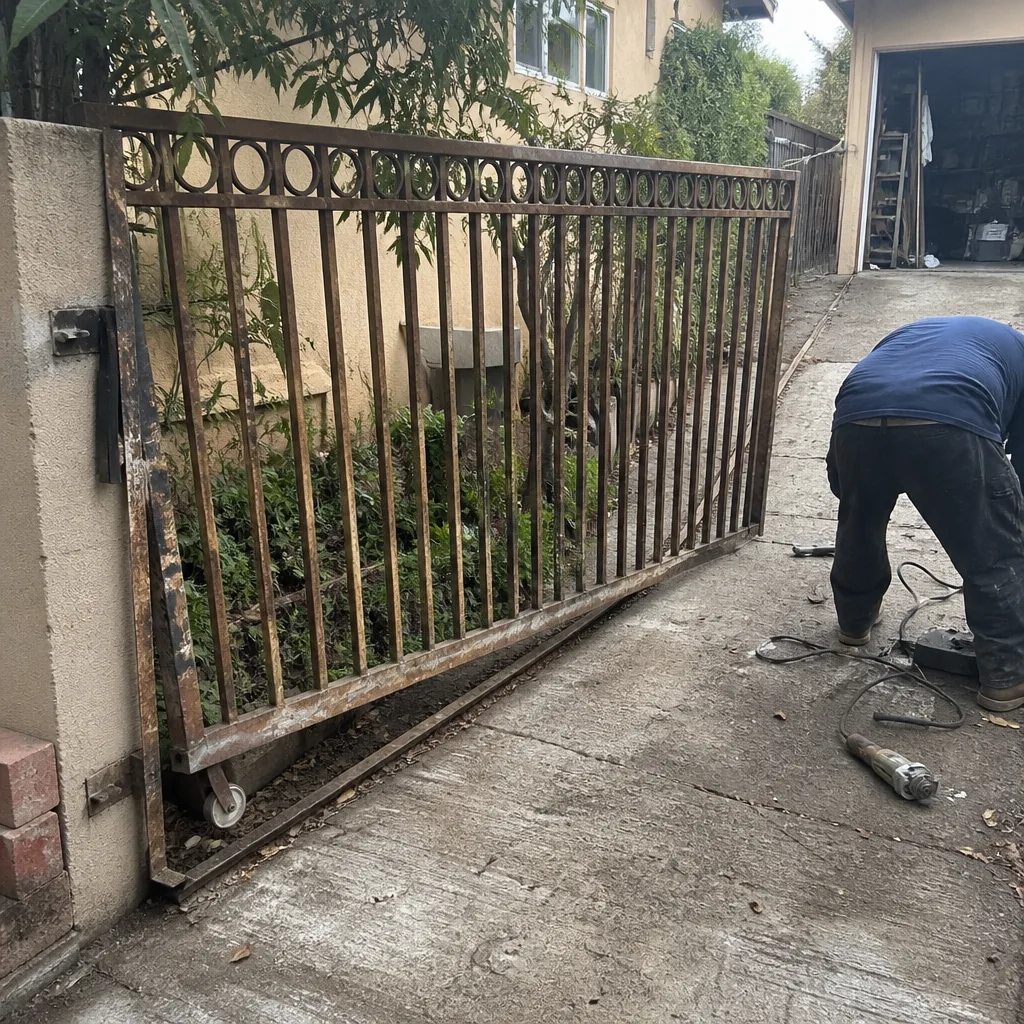 Before
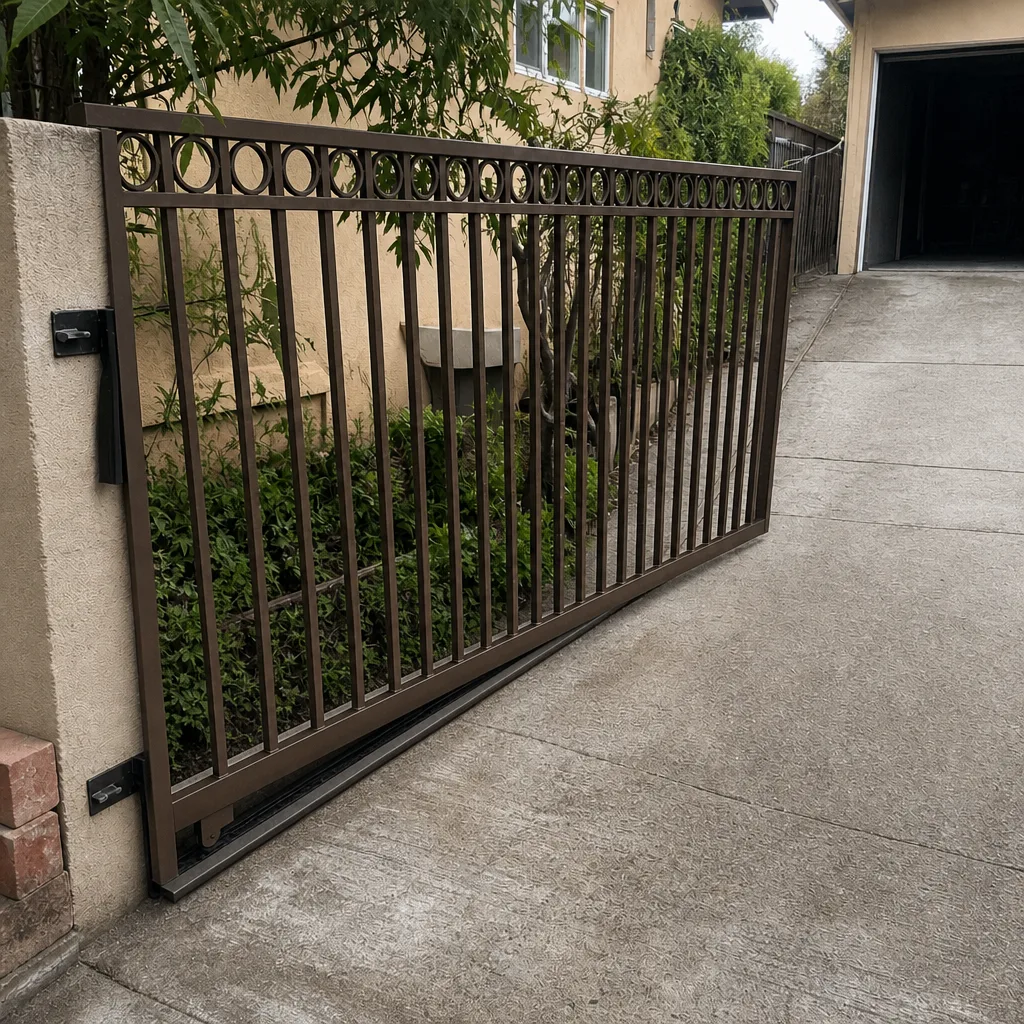 After
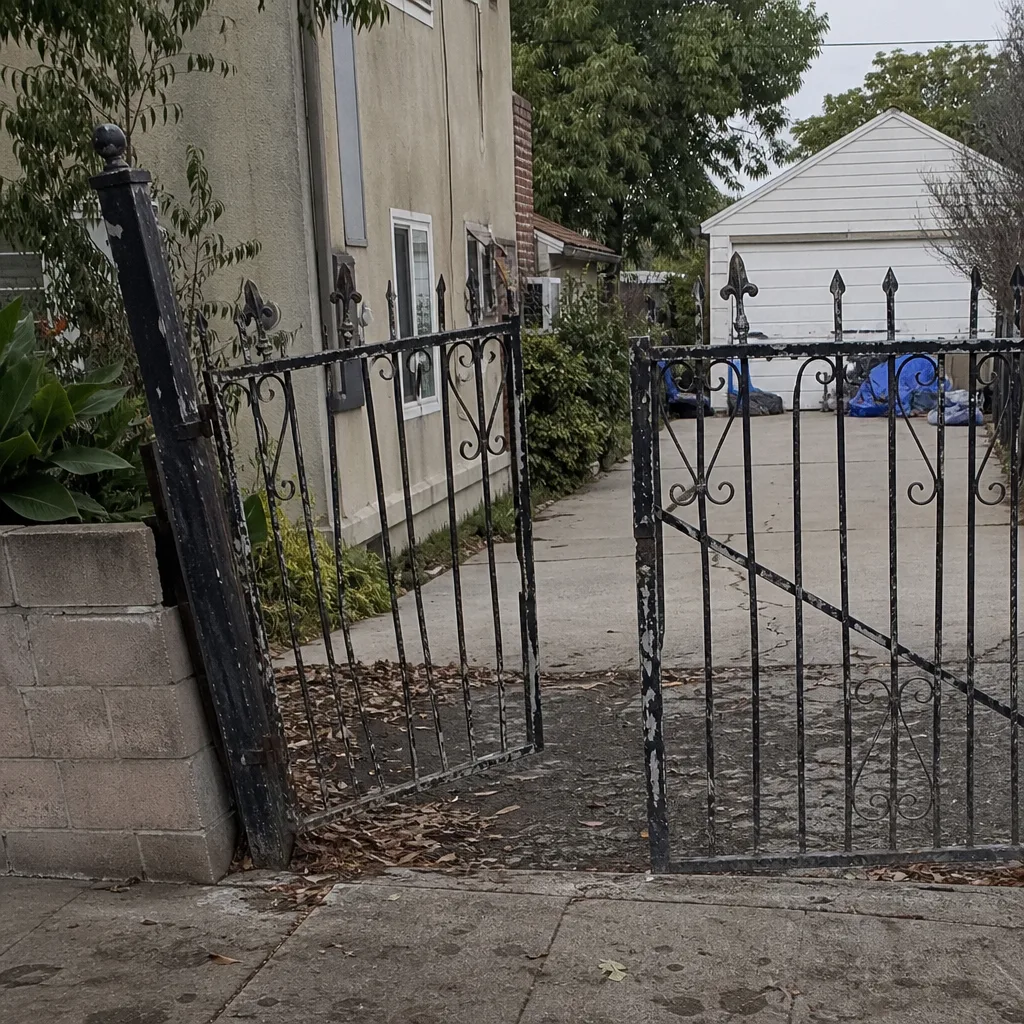 Before
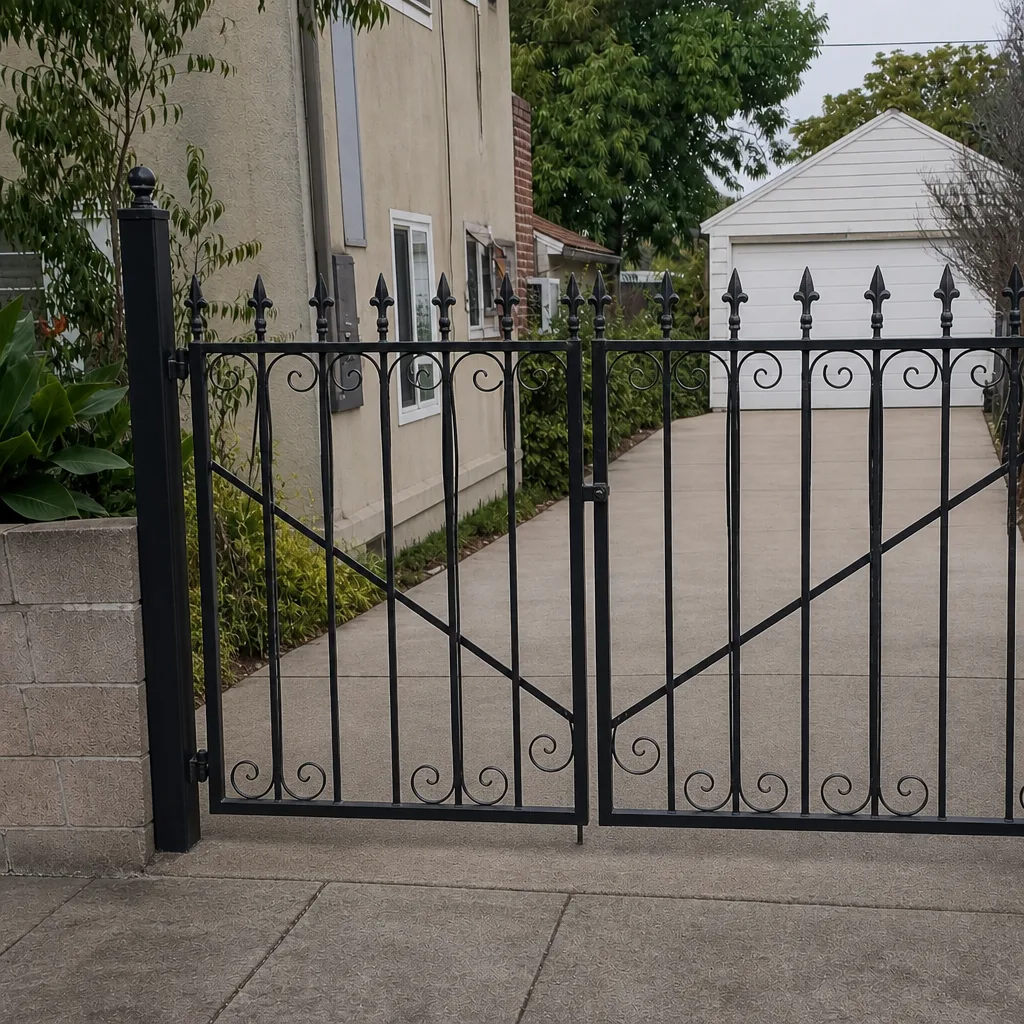 After
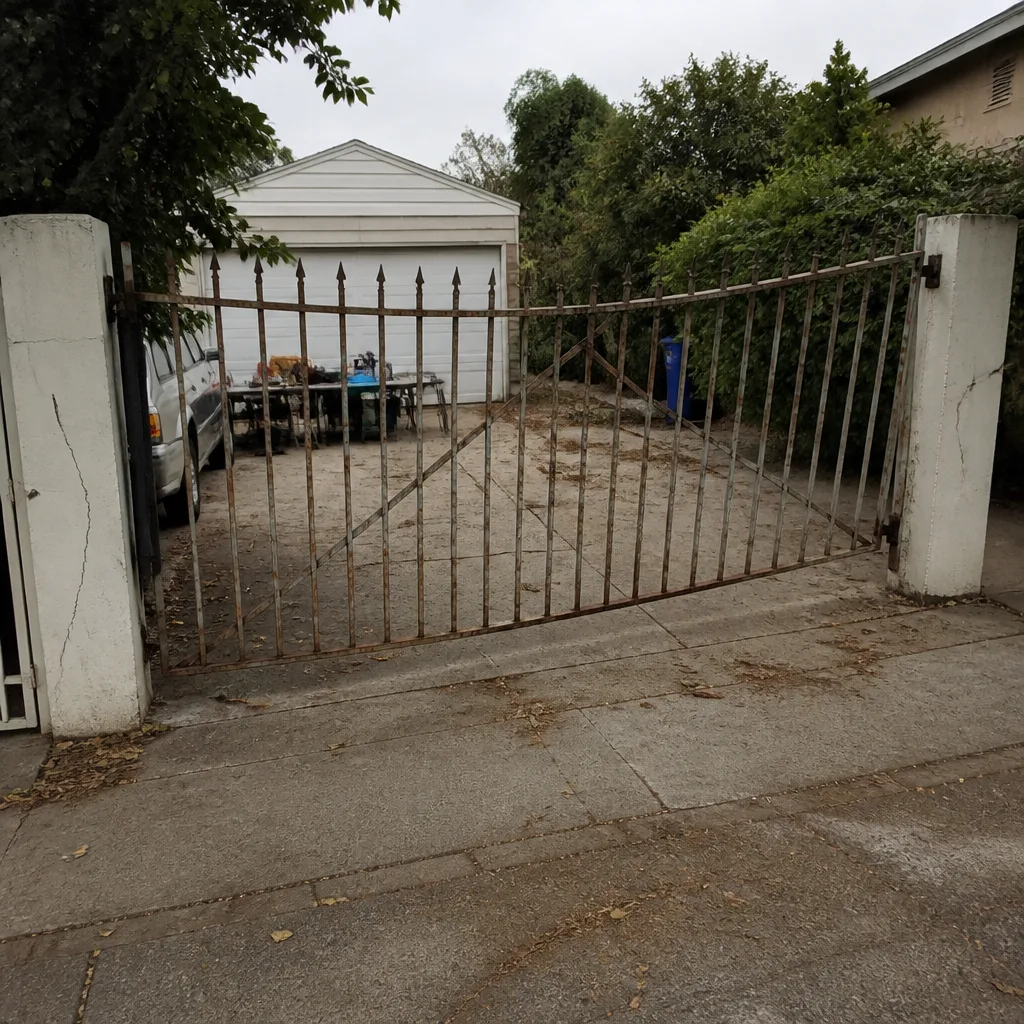 Before
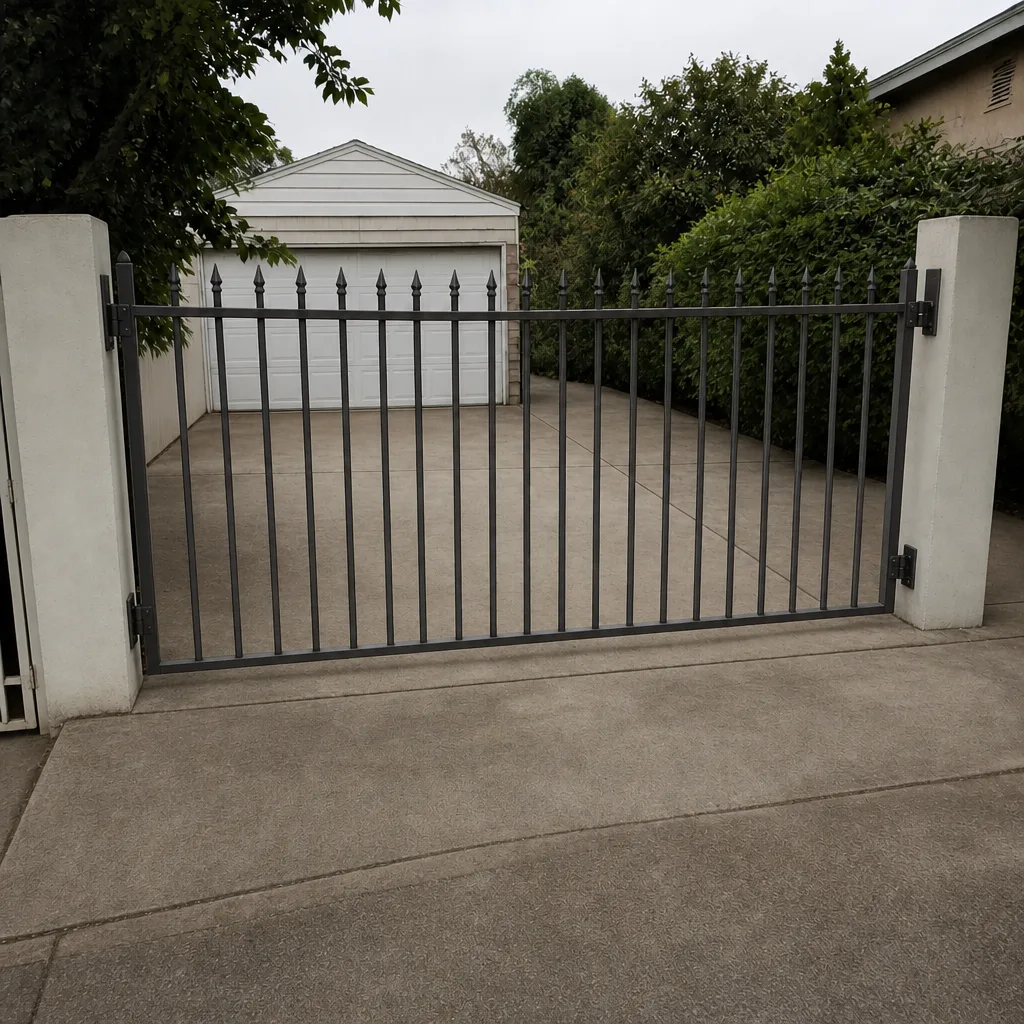 After
When to Call a Professional
Call a professional when the symptom you’re seeing involves the motor, the electronics, the electrical supply, or the structural integrity of the gate itself. A gate that labors, smells electrical, reverses erratically, has come off its track, or has visible weld cracking at its frame corners needs a technician who can diagnose the underlying cause, not just reset the operator. If a gate leaf sags enough to drag, if the operator housing shows water intrusion, or if you simply can’t identify why the gate is misbehaving, stop guessing. You’ll save money by paying for an accurate diagnosis once instead of replacing parts on theory. In Atwater Village, Gate Repair Atwater Village provides free estimates for gate repair, electric gate repair, and full gate installation. Call (877) 752-2593 and describe what your gate is doing. We’ll tell you what it likely means and what it will take to fix it.
Frequently Asked Questions
Either the limit switch is set incorrectly and the operator thinks the gate has finished its travel, or the motor is losing torque and physically can’t push the gate further. If the gate consistently stops at exactly the same point every time, it’s probably a limit adjustment. If it stops at slightly different points or labors audibly near the end of travel, the motor or drive mechanism is failing. In Atwater Village, the age of the operator and the condition of the track are usually the deciding factors.
Most control boards use a series of blinking codes to report specific faults. A single repeating blink often indicates an obstruction or safety sensor issue, two blinks typically point to a limit problem, and three blinks usually means the motor’s thermal protection has tripped. The exact meaning varies by brand. You need to know the manufacturer and model of your operator, and the pattern of the blink, to decode it accurately. Call (877) 752-2593 with that information and we can often tell you what the code indicates over the phone. We answer 24/7. Fast dispatch from 7am to 7pm, Sunday through Friday.
If you’ve already tried a fresh battery and the range is still poor, the issue is likely on the receiver side. The antenna wire inside the operator housing may be bent, pinched, or damaged, the receiver module may have drifted off frequency, or interference from other wireless devices in your Atwater Village neighborhood is crowding the signal band. Test a second remote from the same distance. If both remotes have the same weak range, it’s the receiver, not the remote.
A gate that sags slightly because a hinge bolt has loosened is sometimes within a homeowner’s reach. A gate that sags because the hinge pins are worn, the post has shifted, or the frame has cracked at the weld points is not. You can tell the difference by whether tightening the hinge or lifting the leaf corrects the sag. If the sag returns or the gate drops when you disengage the manual release, the hinge assembly is worn and needs repair. Get a professional assessment before you attempt to re-hang or shim a heavy gate panel.
A new automatic gate in Atwater Village typically runs $3,500 – $12,000 installed, depending on the gate material, size, operator brand, and whether you need new posts, electrical work, or loop detectors. A simple single-leaf steel gate on existing posts is at the lower end. A custom swing or slide gate with new posts, an operator, and electrical runs is at the higher end. The estimate is free, and our written quote sets the price before any work starts. Call (877) 752-2593 to schedule a free on-site estimate in Atwater Village.
A properly installed and maintained gate operator in Atwater Village should last 10 to 15 years, and many last longer with consistent maintenance and early repairs. The factors that shorten operator life here are UV exposure breaking down the housing and wire insulation, dust that works into the drive mechanism, and irrigation overspray that reaches the electronics. An operator installed in direct sun with no shade and no housing protection will fail years before the same unit in a shaded spot. Regular observation, especially of the points in this guide, is the best way to extend that lifespan. If you’re not sure how old your operator is or what condition it’s in, a professional inspection is the fastest way to find out.
The Bottom Line
Your gate is a mechanical system with a finite number of operating cycles, and every symptom it sends means something specific. Grinding is metal on metal. Remote range loss is a receiver, an antenna, or a signal problem. Partial opening is either a limit misadjustment or a failing motor. Blinking lights are error codes waiting to be read. None of these conditions improve by waiting, and many get significantly more expensive every week they’re ignored. Atwater Village homeowners live with gates that face real environmental stress from heat, UV, dust, and irrigation, and the ones who catch syncope early are the ones who pay for a roller bearing instead of an operator. Learn to read the warnings, address what’s safe to address, and call a specialist when the symptom involves the motor, the electronics, or the gate’s structure. Gate repair in Atwater Village is a phone call away: (877) 752-2593. We answer 24/7. Fast dispatch from 7am to 7pm, Sunday through Friday. Free estimates, with the price agreed in writing before work begins.
Written by the team at Gate Repair Atwater Village, serving Atwater Village since 2012.