
Last updated November 5, 2026
 Wrought iron
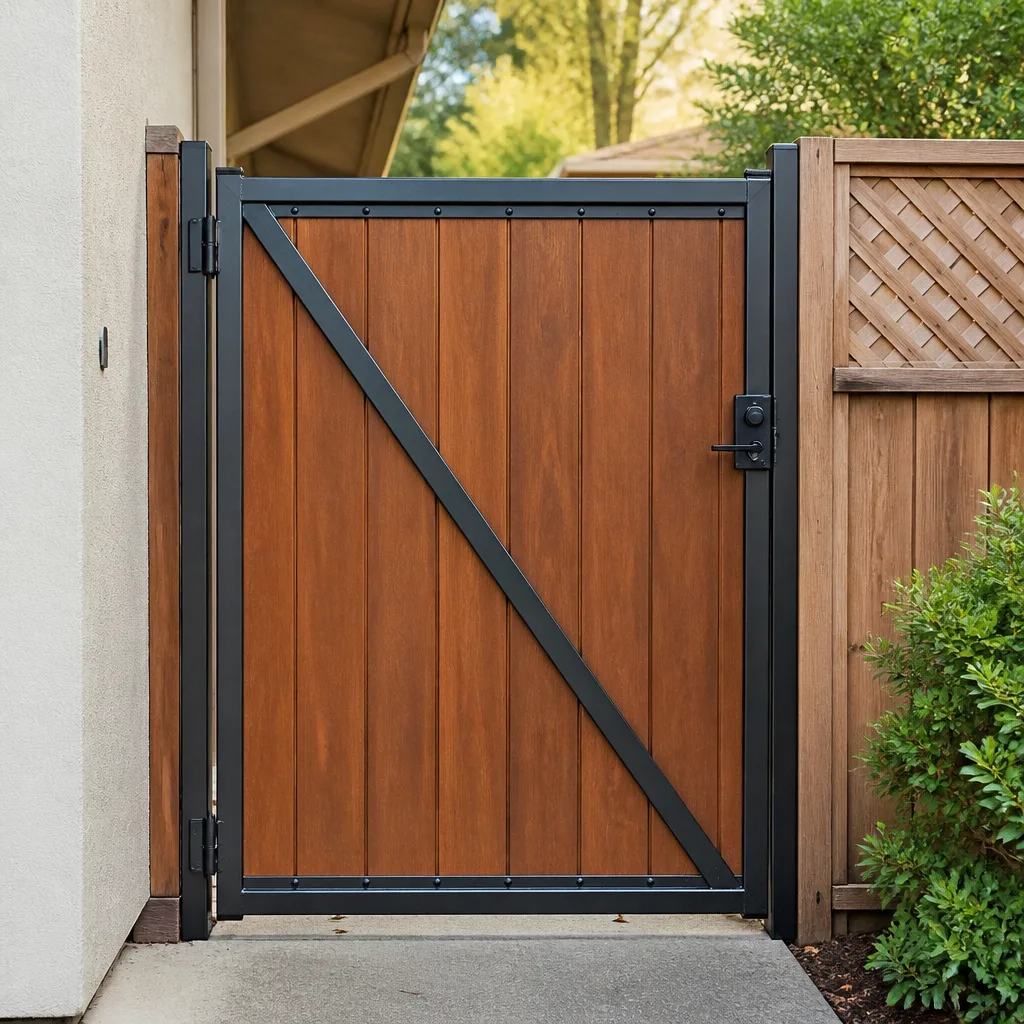 Wood & steel frame
 Farm & ranch
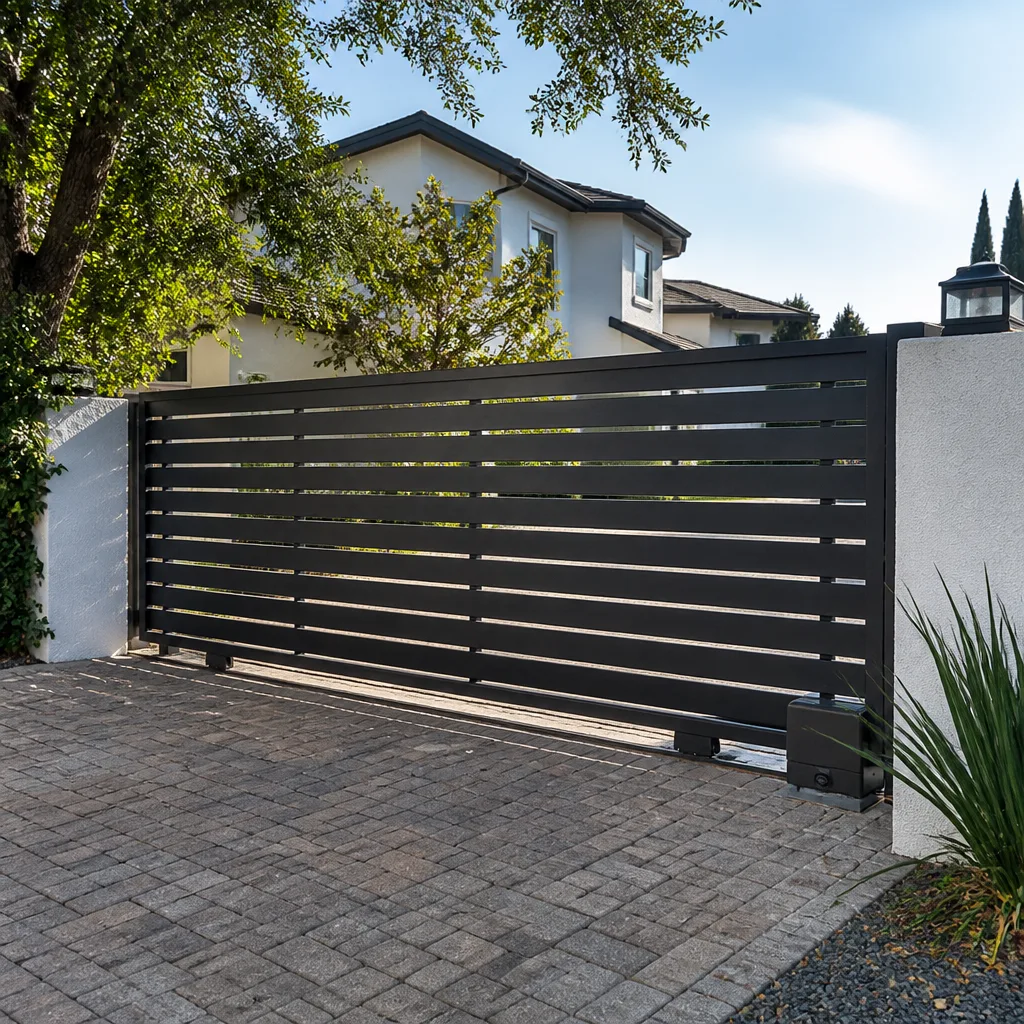 Sliding driveway gates
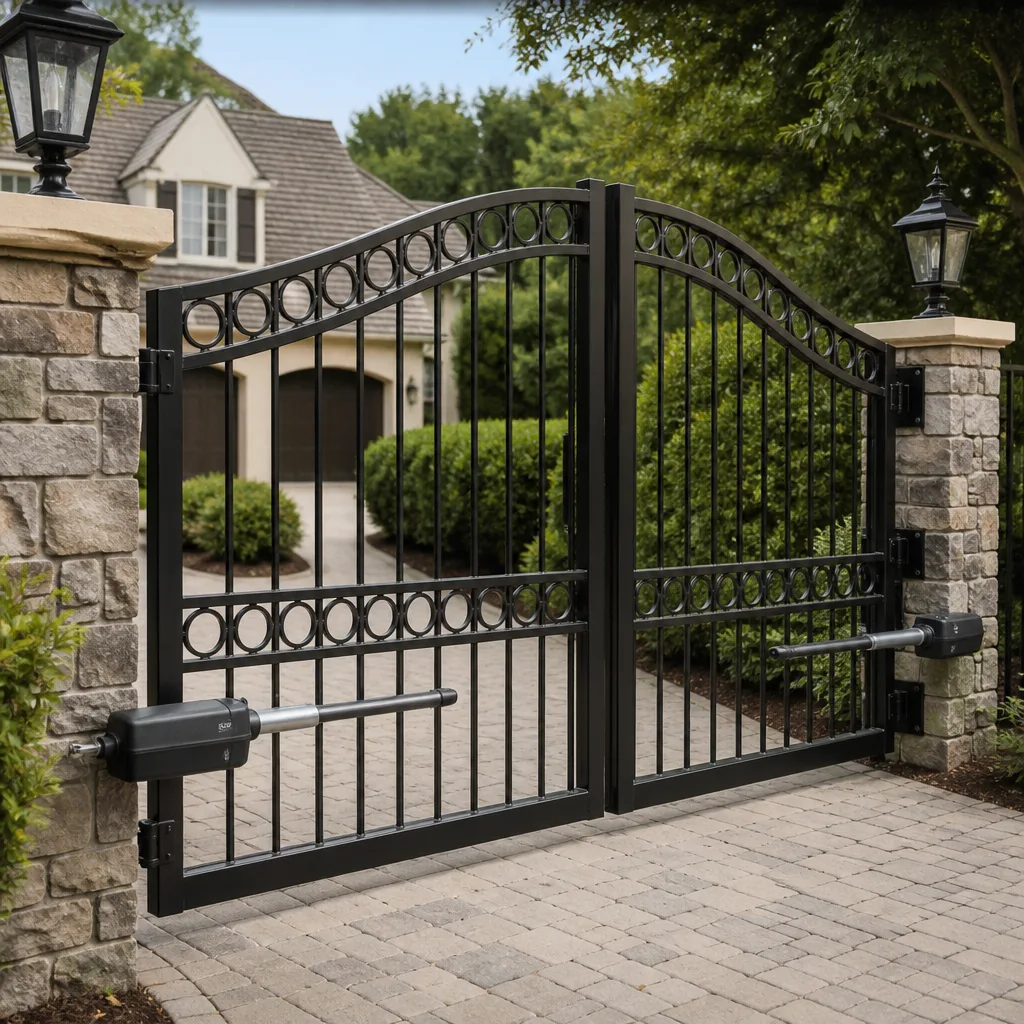 LiftMaster operators
Free on-site gate assessment - hinges, posts, and your LiftMaster or Nice gate operator checked before anything is quoted
The assessment is free and the quote is the invoice.
Get your free estimateGate Repair Maintenance Schedule: What to Do and When
Gate hinges and gate operators have almost nothing in common mechanically, yet most maintenance guides treat them on the same schedule. That’s why operators get over-lubricated until the circuit board is coated in grease, and hinges get ignored until they’re seized solid. This guide breaks down a residential gate maintenance timeline by component type, because a gear rack on a slide gate, a battery in an operator, and a weld on a swing gate all fail on completely different clocks. If you live in Atwater Village, you’re also dealing with a specific urban micro-environment that accelerates some of these failures faster than the generic checklists account for. Here’s what to do, when to do it, and what to leave alone.
Quick Answer
A residential gate maintenance schedule should be broken into three timelines: monthly checks for batteries and photo eyes, twice-yearly lubrication and chain tension adjustments, and annual inspections of control boards and weld joints. Swing gate operators and slide gate operators need different service intervals, and mixing them up is a leading cause of premature operator failure. In Atwater Village, plan for more frequent rack gear and wheel inspections due to road vibration from Glendale Boulevard and particulate buildup from nearby freeways.
Styles & brands we work with
- Wrought iron
- Wood & steel frame
- Farm & ranch
- Sliding driveway gates
- LiftMaster operators
Table of Contents
- Monthly Maintenance: The Five-Minute Electrical Check
- Every Six Months: Mechanical Wear Points
- Annual Maintenance: Structural and Control Board Inspection
- Swing Gate vs. Slide Gate: Why Their Schedules Differ
- What a Homeowner Can Do vs. What Needs a Technician
- Building a Gate Log: The Cheapest Maintenance Tool You Own
- How Atwater Village’s Environment Changes the Schedule
- Common Mistakes to Avoid
Monthly Maintenance: The Five-Minute Electrical Check
Most gate failures that strand a car in the driveway or leave a gate half-open start as electrical issues that give warning signs weeks in advance. A monthly check catches them before they become a 10 p.m. problem. The good news is that this check takes about five minutes and requires no tools beyond your eyes and maybe a damp cloth.
Here’s the monthly routine we recommend for any automatic gate in Atwater Village:
- Battery voltage check. Open the operator cover and look at the battery. If it’s swollen, corroded at the terminals, or older than three years, flag it. A failing battery is the single most common cause of a gate that works intermittently.
- Photo eye lens cleaning. The safety photo eyes near the bottom of the gate track or posts collect dust fast, especially with the particulate that drifts over from the nearby freeways. Wipe both lenses with a dry or slightly damp cloth. A dirty photo eye is the most common reason a gate reverses for no apparent reason.
- Debris sweep on the track or hinge path. Leaves, gravel, and the fine grit that blows around Atwater Village streets accumulate in the gate path. For slide gates, clear the track. For swing gates, clear the arc where the gate travels.
- Listen for changes. Run the gate once and listen. A new grinding sound, a hesitation, or a slower-than-normal cycle is an early warning. Your ears are a legitimate diagnostic tool.
This monthly pass applies to every brand we work on, whether it’s a Mighty Mule on a residential driveway or a DoorKing on a small commercial lot. The components are the same even when the housings look different.
Every Six Months: Mechanical Wear Points
Twice a year, the maintenance focus shifts from electronics to the parts that physically move. This is where a lot of gate owners go wrong, because they either skip this entirely or they overdo it in ways that cause new problems. Here’s what actually needs attention every six months, and how to do each step correctly.
Hinge Lubrication (Swing Gates)
Swing gate hinges are load-bearing joints. Every time the gate opens, the full weight of the panel pivots on those hinge pins. A dry hinge doesn’t just squeak, it forces the operator to work harder, which shortens the operator’s life. Use a penetrating lubricant or a light machine oil on the hinge pins. Do not use grease on hinges. Grease attracts grit, and grit turns into a grinding paste that wears the pin and the bushing faster than no lubrication at all.
Chain Tension (Slide Gates)
If your slide gate runs on a chain drive, check the tension every six months. A chain that’s too loose can jump the sprocket. A chain that’s too tight puts side load on the operator’s output shaft and shortens the motor’s life. There should be about a quarter inch of deflection when you press on the chain with your thumb. If you’re not comfortable adjusting chain tension, this is a five-minute job for a gate repair technician.
Wheel and Roller Inspection
Slide gates ride on wheels or rollers that carry the entire gate weight across the track every cycle. In Atwater Village, those wheels pick up fine particulate that works its way into the bearings. Spin each wheel by hand with the gate in the closed position. If a wheel feels gritty, wobbles side to side, or doesn’t spin freely, it’s on its way out. A worn wheel doesn’t just make the gate noisy, it can allow the gate to sag and bind against the track.
Operator Lubrication: Mostly Don’t
Here’s the counterintuitive part of this whole schedule. Most gate operators need little or no lubrication. The internal gears on many modern operators are sealed and lubricated for life. Adding grease or oil to an operator that doesn’t need it can force lubricant onto the circuit board or limit switches, which causes electrical failures. If the manufacturer’s manual for your specific unit calls for lubrication, follow it. If it doesn’t, leave the operator alone. This is one of the most common mistakes we see, and it’s expensive to reverse.
Annual Maintenance: Structural and Control Board Inspection
Once a year, the maintenance conversation shifts from wear and tear to the stuff that holds everything together. This is the inspection that catches problems before they become structural failures, and it’s also the one most homeowners skip.
Control Board Inspection
The control board is the brain of the gate operator. Once a year, open the operator housing and look at the board. You’re looking for signs of heat damage, burnt components, loose wire connections, or insect intrusion. Ants and spiders love operator housings, and a colony of ants can short a board. If you see any discoloration, corrosion, or loose terminals, that’s a call for electric gate repair before the board fails completely. A control board that looks fine but is over seven years old is also worth having tested, because capacitors degrade with age even without visible damage.
Weld Joint Checks
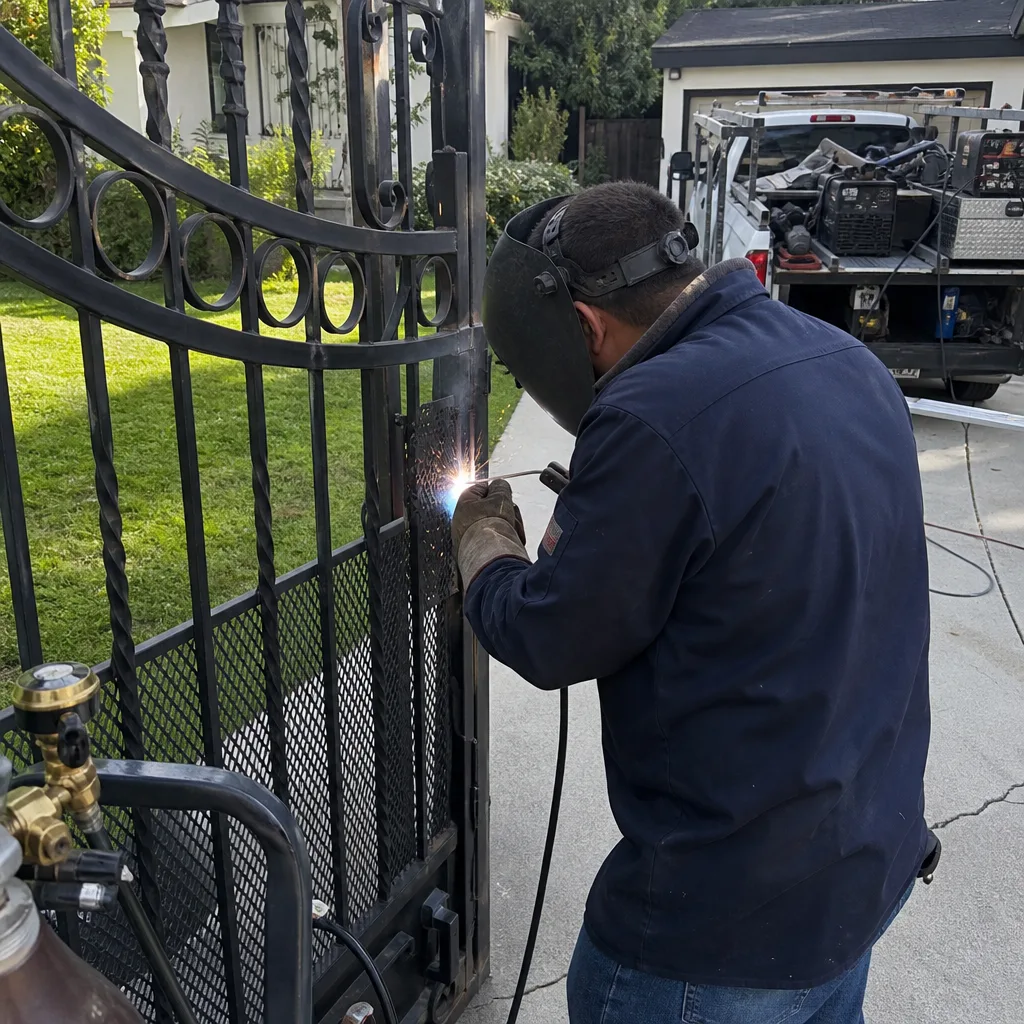
Gate frames, hinge plates, and post brackets are usually welded steel. Welds fatigue over time, especially on gates that cycle many times per day or gates that have been hit by a car at some point. Once a year, visually inspect every weld you can see. Look for hairline cracks, rust lines running through the weld, or any movement at a joint when the gate operates. A cracked weld on a hinge plate is a serious safety issue, because it can release the gate from the post while the gate is in motion. Don’t wait on this one.
Grounding and Power Connections
Loose electrical connections cause intermittent failures that are notoriously hard to diagnose. Once a year, cut power to the operator and check that all wire connections are tight. Look for corrosion on terminals. In Atwater Village’s dry climate, corrosion is less aggressive than in coastal areas, but it still appears on connections that get wet from sprinklers or morning condensation.
Post and Foundation Check
Gate posts take enormous leverage forces. Once a year, check that the posts are still plumb and the concrete around the base isn’t cracking or pulling away from the post. A leaning post puts the entire gate out of alignment, and it gets worse fast once it starts. In Atwater Village’s clay-heavy soil, posts can shift slightly over time even when the original footing was done correctly.
Swing Gate vs. Slide Gate: Why Their Schedules Differ
Most maintenance guides treat a gate as a gate. That’s a mistake. Swing gate operators and slide gate operators have different failure modes, different wear points, and different service requirements. If you treat them the same, you’ll overlook the thing that’s actually going to fail on your specific gate.
Swing gate operators drive an arm or a piston that pushes the gate panel through an arc. The operator is only under load during the opening and closing cycle. The wear points on a swing gate are the hinges, the operator arm bushings, and the limit switches that tell the operator when to stop. Swing gates are more forgiving on dirty tracks because there’s no track, but they’re harder on hinges because the full gate weight pivots through those points every cycle.
Slide gate operators drive a gear that engages a rack or a chain along the gate’s length. The operator is under constant load whenever the gate moves, and the wheels or rollers carry weight the entire time the gate is in motion. Slide gates are harder on wheels, racks, and chain components, but easier on hinges because there aren’t any. Slide gates also collect debris in the track, which is a maintenance item swing gates don’t have.
The practical schedule difference: swing gates need hinge and arm attention every six months, while slide gates need wheel and track attention every six months. The monthly electrical checks are the same for both. The annual structural checks are the same for both. But if you have a slide gate and you’re faithfully lubricating hinges you don’t have, you’re missing the wheels that are quietly grinding themselves to failure.
What a Homeowner Can Do vs. What Needs a Technician
There’s a reasonable line between homeowner maintenance and professional repair, and it exists for two reasons: technical complexity and liability. Most people can handle the monthly checks and the basic cleaning. Some can handle chain tension adjustments. Almost nobody should be opening an operator and testing a control board, because that’s where the line between a five-minute fix and a serious electrical hazard gets crossed.
Here’s a practical breakdown:
- Safe for most homeowners: Photo eye cleaning, debris clearing, listening for changes, visual inspection of hinges and welds, chain tension checks on slide gates, cleaning battery terminals.
- Borderline, depending on comfort level: Battery replacement on a residential operator, hinge lubrication, minor gate alignment adjustments that don’t require lifting the gate.
- Leave to a technician: Control board testing or replacement, limit switch adjustment, capacitor testing, any work that requires opening the operator housing and touching wiring, any weld repair, any post replacement, any work on a gate that’s heavy enough to crush someone if it falls.
The liability reason matters more than most people realize. If a gate falls on a car or a person because a weld failed or a post shifted, and a homeowner made an improper repair before that failure, the technical cause of the failure is now harder to establish. A licensed technician’s work is documented, and that documentation protects everyone involved. The line between maintenance and repair exists for a reason, and it’s not about protecting technician jobs. It’s about making sure a gate that weighs several hundred pounds doesn’t hurt someone.
In our experience at Gate Repair Atwater Village, the most common phone call after a DIY attempt is a control board that got shorted by a homeowner who was trying to tighten connections with the power still on. That call usually comes at night. We’re specialists because this work punishes generalists.
Building a Gate Log: The Cheapest Maintenance Tool You Own
The single most valuable thing you can do for your gate’s long-term health costs nothing and takes about two minutes per month. It’s a gate log. A simple notebook kept near the operator, or a note on your phone, where you record every maintenance action, every observation, and every repair. Here’s why it matters.
When a technician shows up to diagnose a gate problem, they’re working with limited information. The gate isn’t telling them what happened last month. They have to infer from current symptoms and hope the failure mode is obvious. But if you hand them a log that says “gate hesitated three times in the first week of March, then worked fine until mid-April when it reversed twice for no reason,” the diagnosis is already half done. That’s the difference between a one-visit fix and a repeat service call.
What to record in a gate log:
- Date and what you did. Even just “cleaned photo eyes” or “lubed hinges.” This builds a service history.
- Any anomaly you noticed. Hesitation, noise, slower operation, a photo eye that needed cleaning more often than usual.
- Battery replacement dates. Batteries have a lifespan. Knowing when the last one went in tells you when the next one is due.
- Any technician visit and what was done. Keep the invoice, but write a one-line summary in the log too.
- Weather events. Heavy rain, a car bumping the gate, a power outage. These can correlate with later failures.
A gate log also makes the annual inspection more useful. Instead of wondering whether that wear mark on the chain was there last year, you’ll have a record. The goal is component history, because most gate failures are the end of a story that started months earlier. A log lets any technician read that story instead of guessing at it.
How Atwater Village’s Environment Changes the Schedule
Generic maintenance schedules don’t account for where the gate actually lives. Atwater Village has a specific urban micro-environment that accelerates certain wear patterns and leaves others mostly alone. Here’s what that means for your schedule.
Road vibration from Glendale Boulevard. Gates near Glendale Boulevard, Fletcher Drive, or any of the busier corridors are exposed to constant low-frequency vibration from truck and bus traffic. That vibration works on bolts, brackets, and rack gear fasteners over time. It’s why we recommend checking rack gear bolts and operator mounting bolts more frequently on gates within a block or two of major roads. A bolt that works loose from vibration creates a cascade of misalignment problems.
Particulate from nearby freeways. The 5 and the 2 are close enough that fine particulate drifts over the neighborhood. That dust settles into operator housings, coats photo eye lenses, and works its way into wheel bearings and chain links. Monthly photo eye cleaning isn’t optional here; it’s a minimum. If your gate faces a major road, you might clean the photo eyes twice a month. Slide gate wheels in the area also benefit from a quick rinse every few months during the dry season, because the dust acts as a dry lubricant that also abrades.
Dry heat and sun exposure. Atwater Village gets hot, dry summers. Direct sun on an operator housing raises internal temperatures and accelerates capacitor aging and battery degradation. If your operator is in direct afternoon sun, check the battery more frequently during summer months. A shaded operator lasts measurably longer. The dry climate also means less rust than coastal areas, but plastic components, wiring insulation, and rubber seals dry out faster here.
Clay-heavy soil movement. The soil in much of Atwater Village expands and contracts with moisture changes. That movement is subtle, but over years it can shift gate posts slightly. If your gate starts scraping the ground or the latch alignment changes, don’t assume the gate bent. Check the posts first. This is an annual inspection item that’s more important here than in areas with rockier soil.
Common Mistakes to Avoid
- Over-lubricating the operator. The most common mistake we see. Most operators are sealed and need no added lubrication. Adding grease or oil forces foreign material into the unit and often causes electrical failures.
- Using the wrong lubricant on hinges. Grease on hinges attracts grit and turns into an abrasive paste. Use a penetrating oil or light machine oil on hinge pins, and wipe away any excess.
- Ignoring photo eyes until the gate stops working. Dirty photo eyes cause intermittent reversing that many homeowners interpret as a failing operator. Clean the lenses monthly before blaming the electronics.
- Treating swing and slide gates the same. The maintenance needs are different. Swing gates need hinge attention; slide gates need wheel and track attention. Missing the right one for your gate type means avoiding the maintenance that actually matters.
- Waiting until a weld cracks to look at welds. Annual visual inspection catches hairline cracks before they become a hinge plate tearing off a post. By the time a weld visibly fails, the repair is larger and riskier.
- Skipping the log because it seems unnecessary. A gate log costs nothing and turns a vague future diagnosis into a quick one. The homeowners who keep logs almost never call with a mystery failure.
- Testing live wiring without cutting power. Even a residential gate operator carries enough current to injure. Cut power at the breaker or the disconnect before touching any wiring, and if you’re not confident, call a specialist.
See the difference
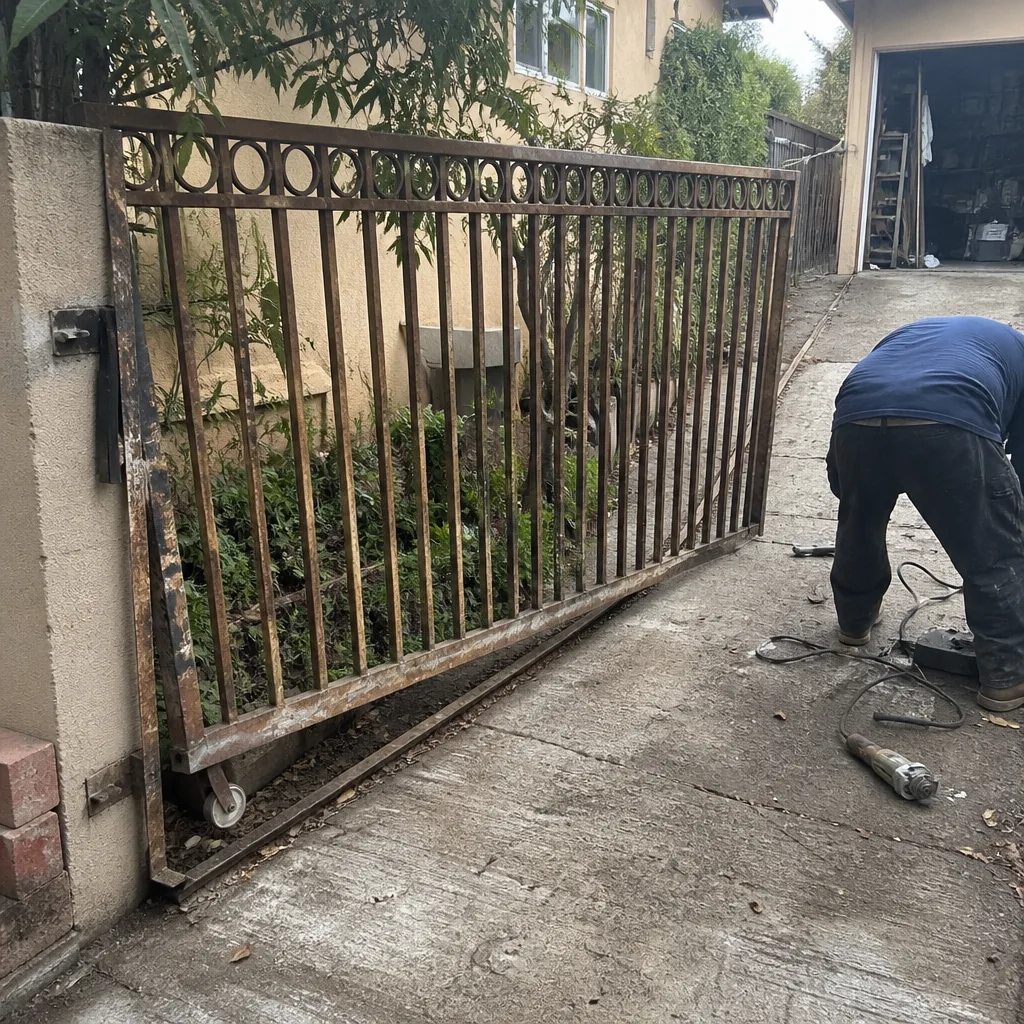 Before
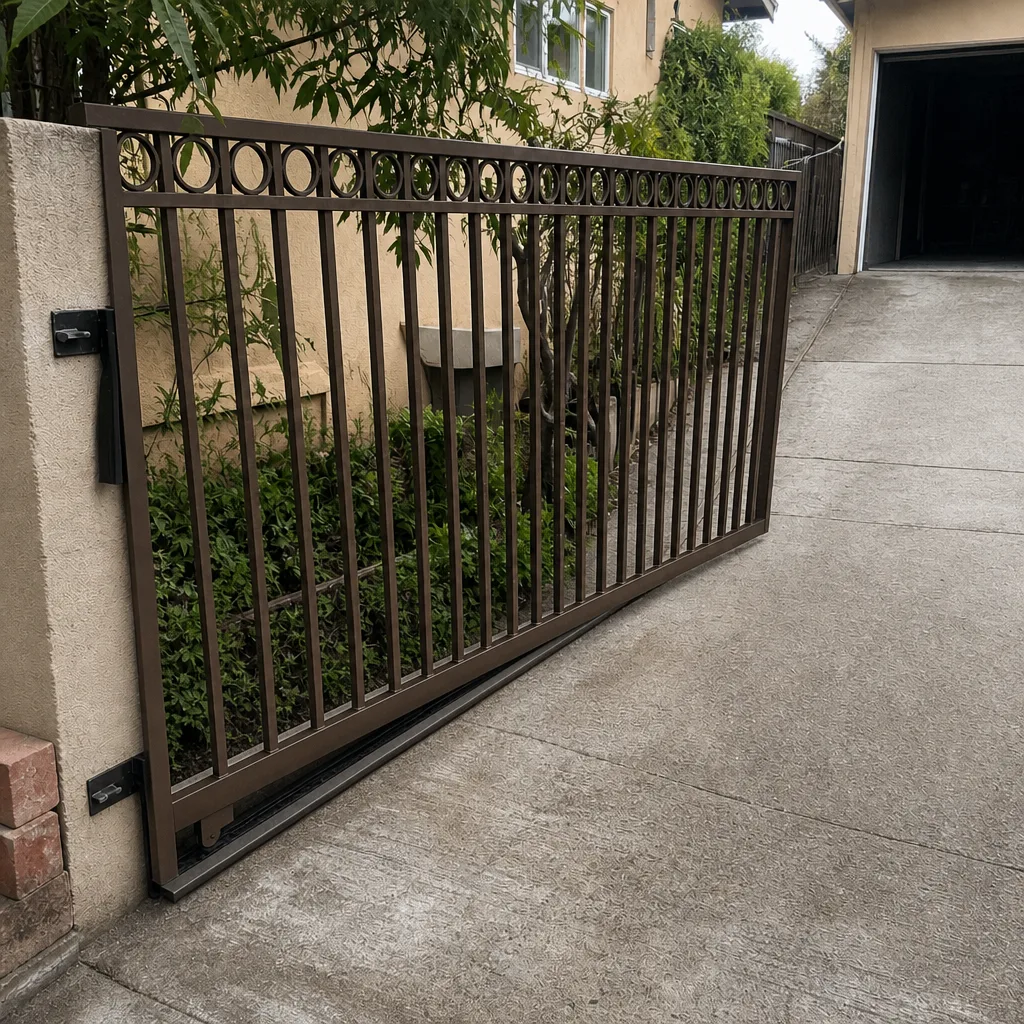 After
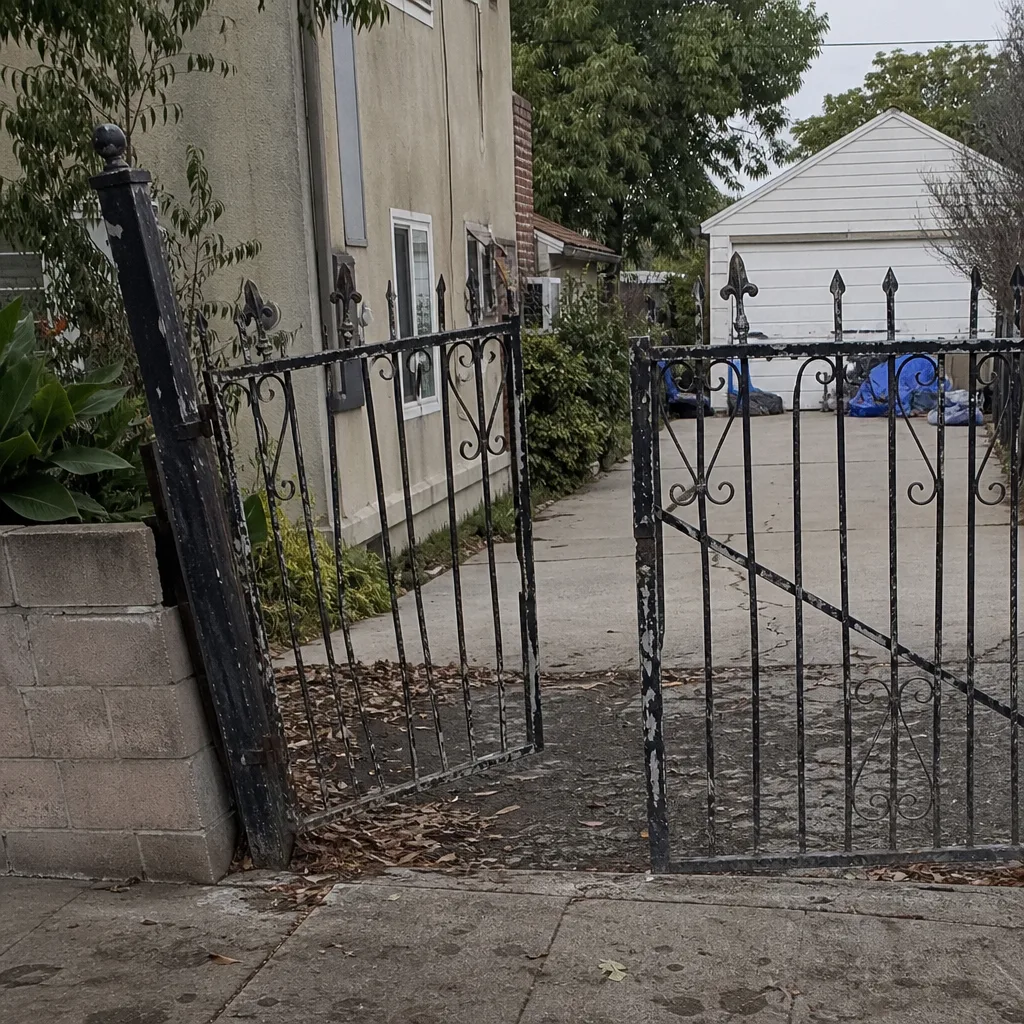 Before
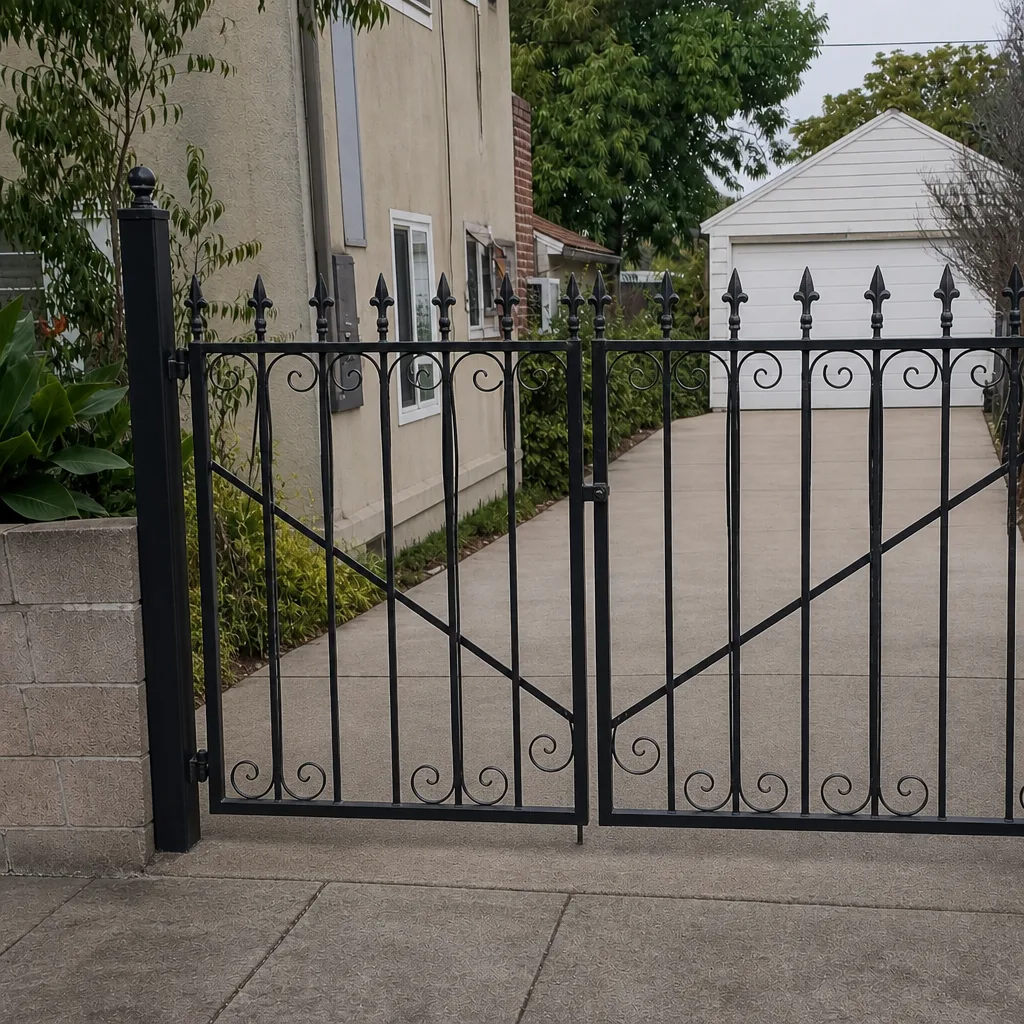 After
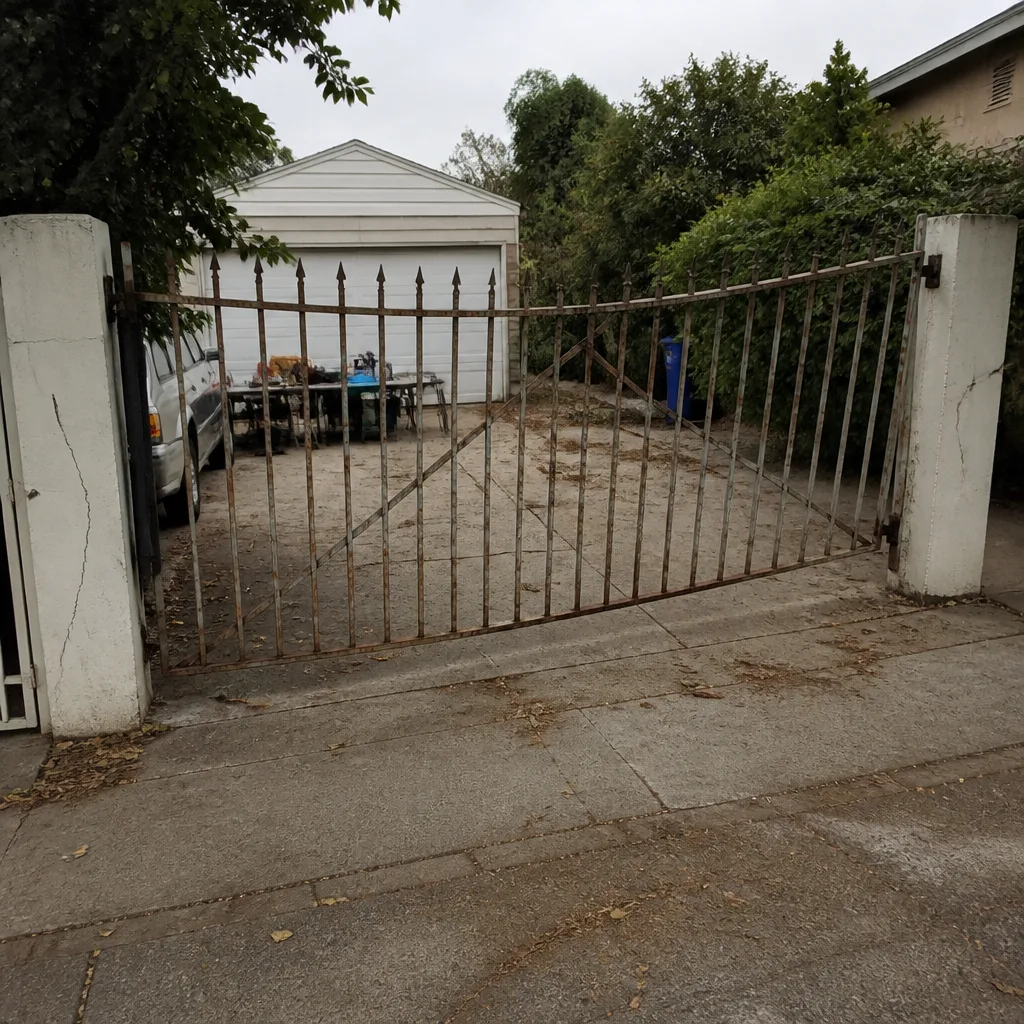 Before
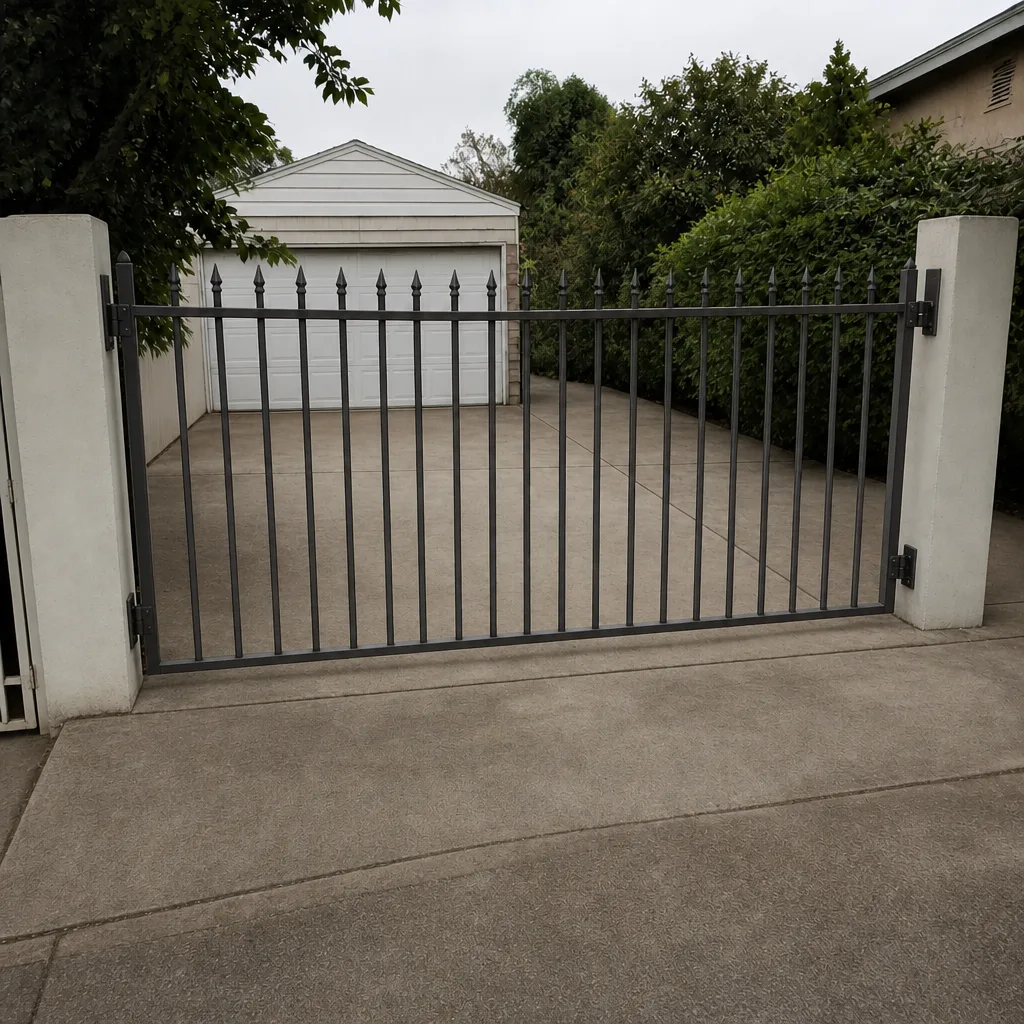 After
When to Call a Professional
Some gate problems announce themselves clearly: the gate won’t move at all, the operator hums but nothing happens, the gate reversed onto a car, or there’s visible damage at a weld or hinge. These are not maintenance items. They’re repair calls, and waiting makes them more expensive. Other situations are less obvious but equally urgent: a gate that’s noticeably slower than it used to be, a control board that smells burnt, or a post that’s obviously out of plumb. If you see or smell anything that suggests an electrical fault, cut power and call.
You should also call if your annual inspection reveals anything you’re not comfortable addressing yourself. Chain tension adjustments, limit switch tweaks, and control board testing are all quick jobs in trained hands and risky jobs in untrained ones. Gate Repair Atwater Village offers free estimates in Atwater Village. Call (877) 752-2593. We answer 24/7. Fast dispatch from 7am to 7pm, Sunday through Friday.
Frequently Asked Questions
Monthly for photo eyes, battery checks, and debris clearing. Every six months for hinge lubrication on swing gates or chain and wheel inspection on slide gates. Annually for control board inspection, weld checks, and post alignment. In Atwater Village, expect to clean photo eyes more often if your gate faces a major road.
Most homeowners can handle monthly cleaning and visual inspections, and many can lubricate hinges and check chain tension. Control board work, limit switch adjustments, weld repairs, and anything involving wiring should go to a licensed technician. The line exists because gate components are heavy and electrical systems carry real risk.
In our experience, failing batteries and dirty photo eyes are the two most common culprits for residential gates in the area. Both are preventable with monthly checks. After that, worn slide gate wheels and loose rack bolts from road vibration are the next most frequent issues.
No. Monthly electrical checks are the same for both, but swing gates need hinge and operator arm attention every six months, while slide gates need wheel, track, and chain or rack attention every six months. Annual structural checks apply to both.
Check the manufacturer’s manual for your specific brand. Most modern operators, including LiftMaster, DoorKing, and Elite units, are sealed and lubricated for life. If the manual doesn’t call for lubrication, don’t add any. Adding grease to a sealed operator is a common cause of control board failure.
Stop running the gate and inspect the obvious wear points. On a swing gate, check the hinges and operator arm. On a slide gate, check the wheels, chain, and rack. A grinding sound is metal on metal, and the faster you find it, the smaller the repair. If you can’t identify the source, call (877) 752-2593 and we’ll diagnose it.
The Bottom Line
A gate maintenance schedule that works is built around how components actually fail, not around a generic seasonal checklist. Monthly electrical checks, twice-yearly mechanical attention, and an annual structural inspection cover the three failure timelines that matter. Swing and slide gates need different six-month routines. A gate log makes future repairs faster and cheaper. And in Atwater Village, road vibration and freeway particulate mean a little more attention to bolts, racks, wheels, and photo eyes than the generic guides suggest. The good news is that none of this is complicated. Five minutes a month, an hour twice a year, and a disciplined annual inspection keep most gates running for a long time. When something does fail, it’s better to call a specialist than to guess. For a free estimate on any gate issue, call (877) 752-2593. We answer 24/7. Fast dispatch from 7am to 7pm, Sunday through Friday.
Written by the team at Gate Repair Atwater Village, serving Atwater Village since 2012.