
Last updated November 4, 2026
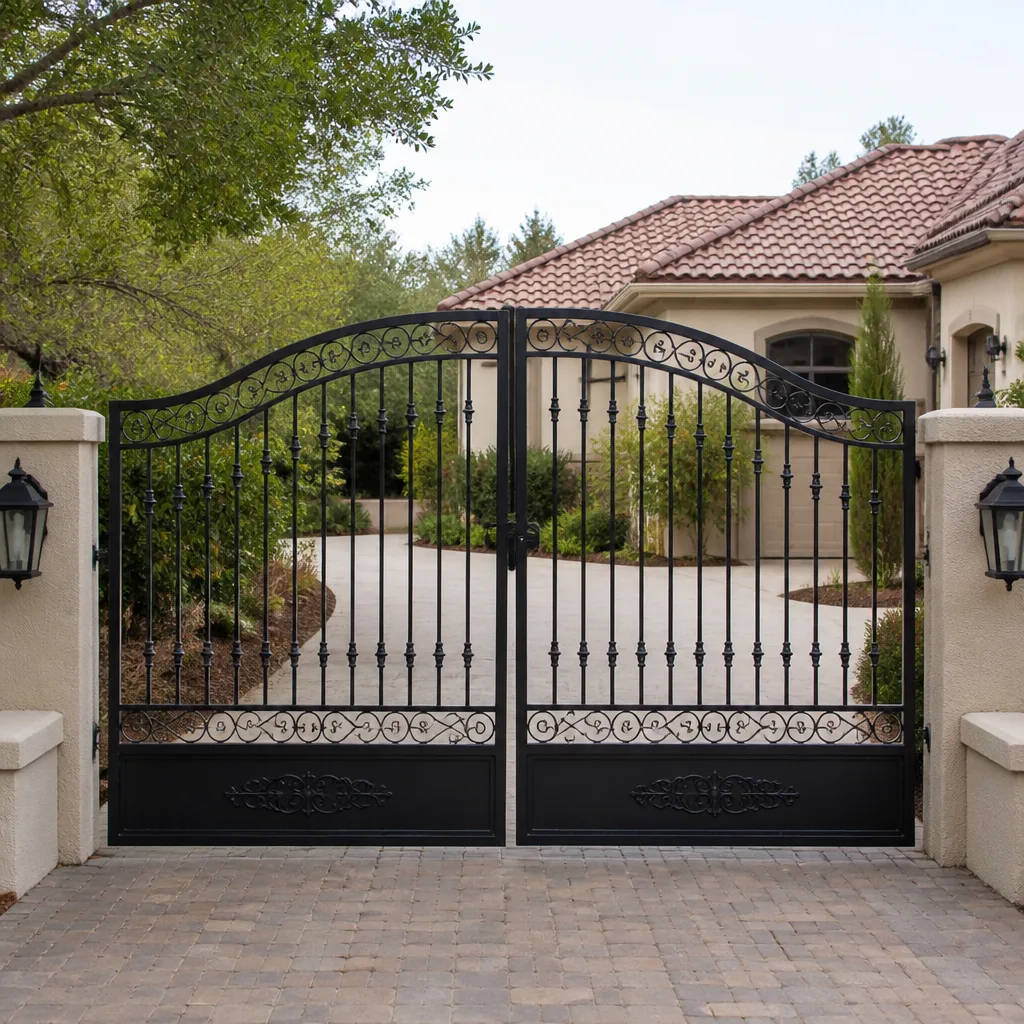 Wrought iron
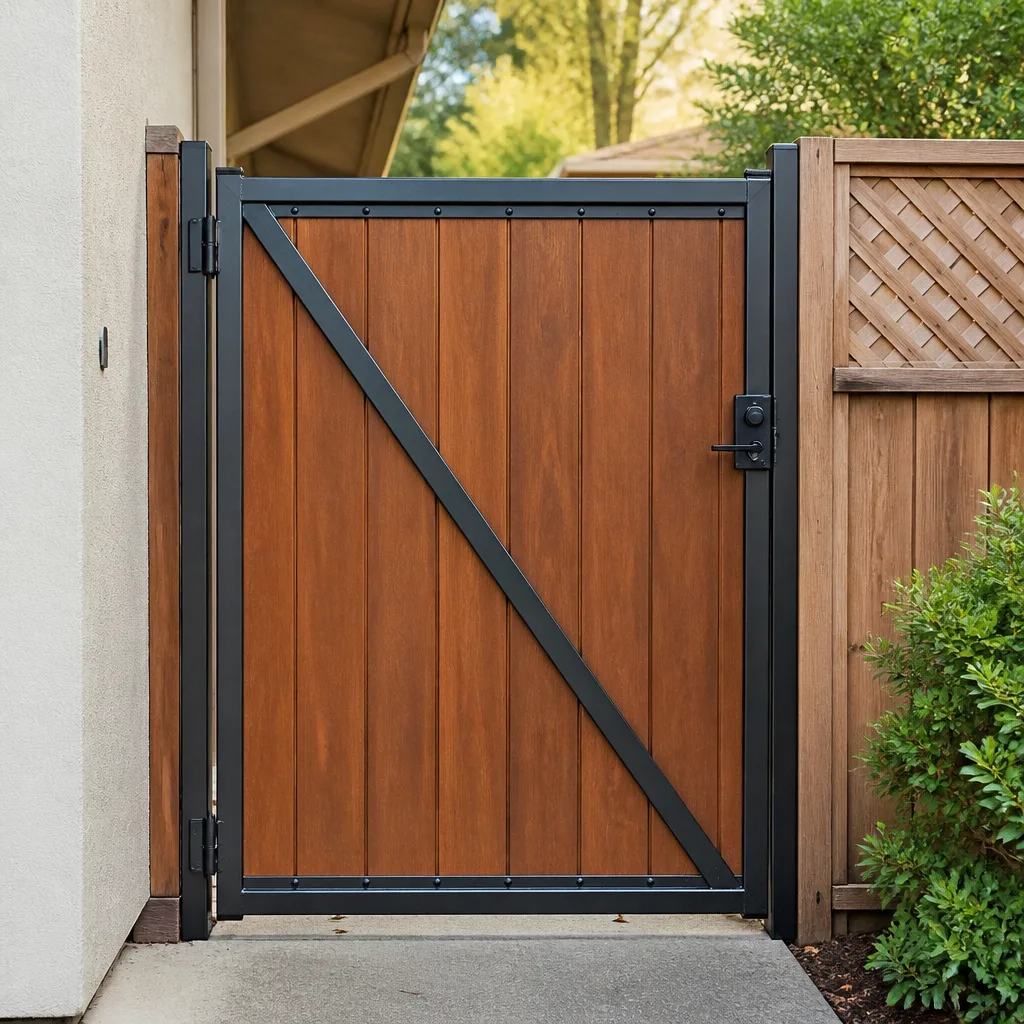 Wood & steel frame
 Farm & ranch
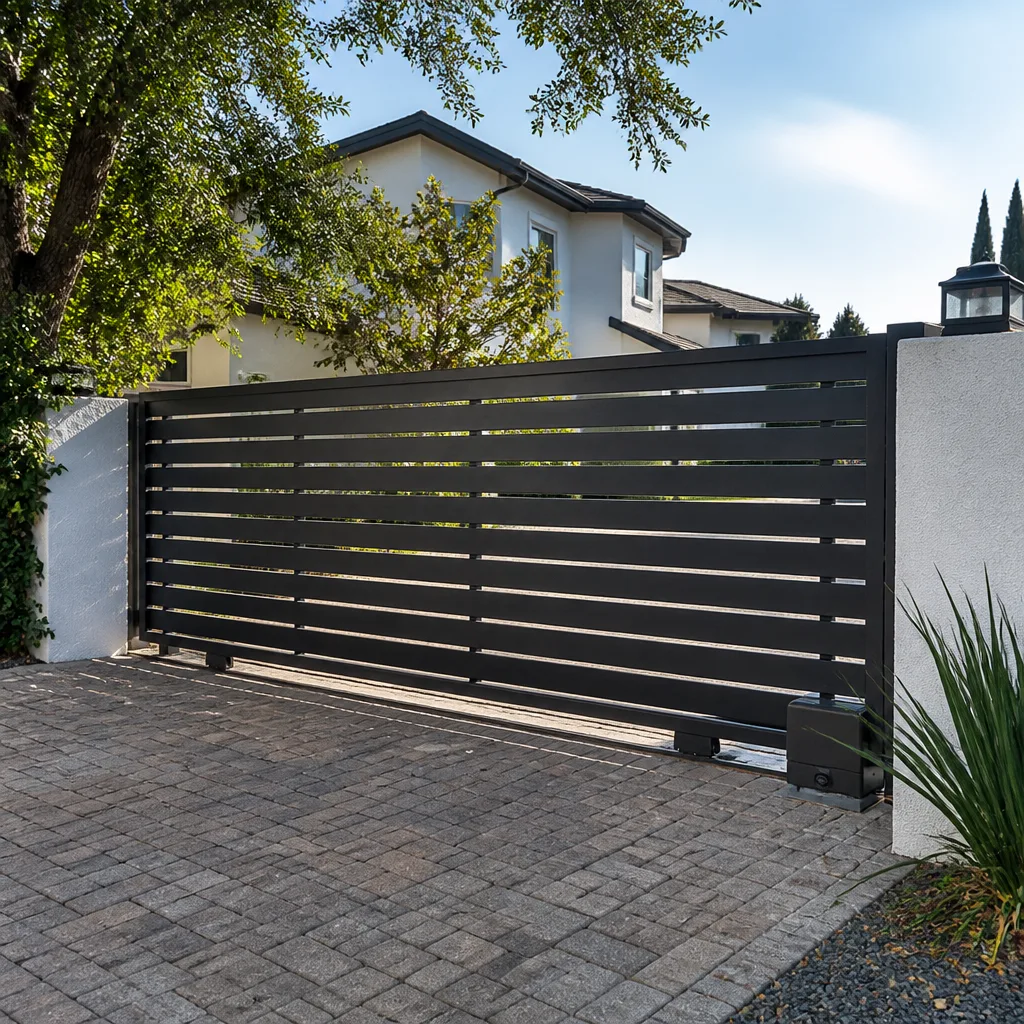 Sliding driveway gates
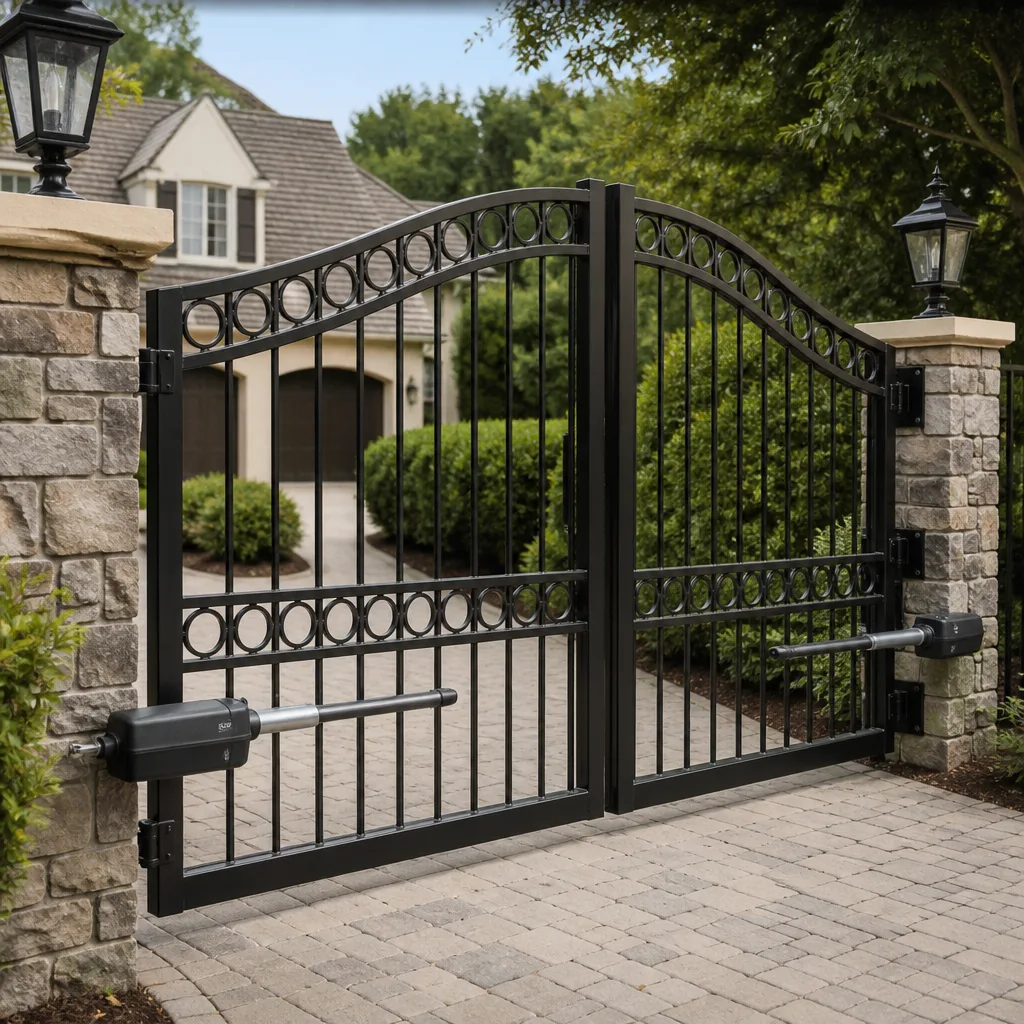 LiftMaster operators
Free on-site gate assessment - hinges, posts, and your LiftMaster or Nice gate operator checked before anything is quoted
The assessment is free and the quote is the invoice.
Get your free estimateDIY vs Professional Gate Repair: The Atwater Village Homeowner’s Decision Guide
Most Atwater Village homeowners assume the DIY-versus-professional gate repair decision comes down to how handy they are. It doesn’t. The real line is drawn by safety standards most people have never heard of, and crossing it can void an insurance policy. Your motorized gate is classified as an automated barrier under UL 325, the same safety standard applied to industrial machinery. That doesn’t mean you can’t touch it yourself, but it does mean three specific adjustments legally require a qualified technician in California. This guide draws that line precisely, task by task, so you know exactly where DIY ends and where calling a specialist becomes the only sensible move.
Quick Answer
DIY gate repair in Atwater Village is fine for remote programming, battery replacement in transmitters, and basic track cleaning, but anything involving the operator’s electrical wiring, safety reversal force settings, or the physical weight of gate panels belongs with a licensed professional. Electric gate repair crosses into safety-critical territory quickly, and mistakes create crush hazards or void your homeowner’s insurance coverage. A gate repair specialist can typically diagnose the issue faster than most homeowners can research it, which means calling often costs less than a failed DIY attempt.
Styles & brands we work with
- Wrought iron
- Wood & steel frame
- Farm & ranch
- Sliding driveway gates
- LiftMaster operators
Table of Contents
- Why UL 325 Changes the DIY Equation
- What’s Genuinely DIY-Safe
- What’s DIY-Risky: Proceed with Caution
- What’s Legally or Practically Off-Limits
- The Real Cost of Gate Repair Tools
- How DIY Affects Warranties and Insurance in California
- The Hidden Time Cost of Learning on Your Own Gate
- Common Mistakes to Avoid
Why UL 325 Changes the DIY Equation
UL 325 is not a suggestion. It’s a national safety standard that governs automated gate operators, and it carries legal weight in California. The standard sets specific requirements for how much force a gate may exert before it must stop and reverse direction. The intent is simple: a gate should never crush a person, a child, or a vehicle. When a technician adjusts this setting, they’re not just tuning performance. They’re certifying that the gate operates within a legally defensible safety envelope.
Here’s what that means for an Atwater Village homeowner. If you adjust the reversal force yourself and someone gets injured, the liability lands on you. Your homeowner’s insurance may decline the claim because the gate was no longer in compliance with a recognized safety standard. We’ve seen this play out in residential neighborhoods across Los Angeles, and in Atwater Village specifically, where many homes have automatic driveway gates on narrow lots close to sidewalks. A gate that doesn’t reverse quickly enough can injure a pedestrian walking past. That’s a real exposure, not a theoretical one.
California also requires certain gate installations and major repairs to be performed by qualified personnel. The state doesn’t issue a specific “gate repair license,” but electrical work on the operator falls under contractor licensing rules. This is why electric gate repair sits in a different category from swapping out a hinge. The wiring, the safety edges, the photo eyes, and the reversal force sensor all interact with the UL 325 compliance of the unit as a whole. A specialist understands those interactions. A YouTube tutorial usually doesn’t.
What’s Genuinely DIY-Safe
We’re not going to tell you that every gate repair requires a professional. That would be dishonest, and it’s not how we operate. There are tasks any reasonably careful Atwater Village homeowner can handle without special training or liability exposure. Here’s the list of what’s genuinely safe to do yourself.
Remote Control Programming
Most gate remotes from brands like LiftMaster, Elite, and Mighty Mule follow a simple learn-button sequence. Press the learn button on the operator, press the button on the remote, and they pair. The instructions are in the manual. This task involves no wiring, no moving parts, and no safety adjustments. If you can program a garage door opener, you can program a gate remote.
Transmitter Battery Replacement
This one’s obvious, but it’s worth stating. If your remote works only when held close to the operator, or not at all, replace the battery first. A CR2032 or A23 battery costs a few dollars at any Atwater Village hardware store. We’ve lost count of how many times we’ve arrived at a diagnosis of “dead battery” after the homeowner assumed the worst.
Basic Track Cleaning
Slide gates accumulate debris in the track, especially in Atwater Village where wind carries dust and leaves from the LA River corridor. Clearing out leaves, small stones, and built-up grime is a straightforward task. Use a stiff brush and a shop vacuum. Don’t use water in the track unless you’re certain the electrical components are sealed and elevated. Dry cleaning is safer.
Visual Inspection of Moving Parts
You can and should look at your gate regularly. Check the wheels for wear, the chain or belt for visible damage, and the posts for movement. Catching a deteriorating wheel before it fails saves you from a gate that comes off its track. You’re not repairing anything in this scenario. You’re gathering information. That’s exactly what a homeowner should do.
Lubrication of Non-Electrical Components
Hinges, rollers, and track wheels benefit from periodic lubrication with a silicone-based spray. Avoid grease, which collects dust and creates a grinding paste. Spray the moving metal parts, wipe away the excess, and you’ve done a maintenance task that doesn’t touch any safety system. Note that the operator’s internal gears are not part of this list. Those require opening the unit, and that takes you into a different category.
What’s DIY-Risky: Proceed with Caution
The next tier includes tasks that are physically possible for a determined homeowner but carry meaningful risk if done wrong. These are the gray zone repairs where the decision really depends on your tools, your time, and your tolerance for liability.
Adjusting the Safety Reversal Force Setting
Here’s the one we want every Atwater Village homeowner to understand clearly. The reversal force setting controls how much resistance the gate must encounter before it stops and reverses. Set it too high and the gate will push through an obstruction, including a person. Set it too low and the gate will reverse constantly, failing to close completely. UL 325 specifies an exact testing procedure involving a test object placed in the gate’s path. The adjustment must be verified against that standard, not against “it seems fine.”
This is the single most dangerous DIY adjustment on a residential gate. If you change this setting and someone is injured, you have a liability problem that no amount of YouTube confidence will fix. This is not a task where being careful replaces being qualified. It requires a calibrated understanding of force in pounds and a specific test sequence. In our experience, this is the adjustment most frequently mis-set by well-meaning homeowners.
Replacing Photo Eyes or Safety Edges
Photo eyes are the small sensors near the base of the gate that detect an obstruction in the beam path. Safety edges are the pressure-sensitive strips along the gate’s leading edge. Both are UL 325 compliance components. Replacing them involves wiring, and wiring errors can render the safety system non-functional while the gate continues to operate. This is a specific failure mode that’s worse than a gate that won’t open: it’s a gate that opens and closes with no functional safety reversal. A homeowner may not know this has happened until an accident occurs.
Replacing a Gate Wheel or Roller
This one’s borderline. If the wheel is at the bottom of a slide gate and the gate can be safely supported, a homeowner with jack stands and basic tools can replace it. But heavier gates require lifting equipment, and the moment a gate is off its track, it becomes a crush hazard. An unwieldy 400-pound gate can pin a hand or worse in a heartbeat. Use your judgment honestly. If the gate is light and access is easy, proceed. If you’re lifting anything that requires real strength to manage, call us.
Chain or Belt Tension Adjustment
Slide gates driven by chains or belts need proper tension to operate smoothly. Too slack and the gate jerks or won’t move. Too tight and you stress the operator’s internal gears. Adjusting tension requires loosening the drive assembly and re-tensioning to the manufacturer’s specification. For brands like FAAC and BFT, that specification varies by model. Guessing often leads to stripped gears, and replacing an operator is far more expensive than a tension adjustment.
What’s Legally or Practically Off-Limits
Now we’re in the category where even thinking about DIY is a mistake. These repairs involve the operator’s internal wiring, line voltage connections, or the structural integrity of the gate itself. In California, some of this work requires a licensed contractor, and all of it carries serious safety implications.
Operator Wiring and Board Replacement
The operator houses the control board, capacitors, limit switches, and often the transformer. Opening the unit and working on the board is not a homeowner task. The components carry electrical current, and a short can destroy the board or start a fire. Board replacement on commercial-grade operators like some FAAC and Viking units requires component-level diagnostics. This is the heart of electric gate repair, and it’s the reason we stayed focused on this single trade. Generalist handymen often decline this work because they know the risk.
High-Voltage Line Connections
If your gate operator runs on 110V or 240V line voltage, the connection point is a serious electrical hazard. Working on it requires shutting off the correct breaker, verifying the absence of current, and following code for outdoor electrical connections. Atwater Village homes include a mix of older bungalows and newer builds, and the electrical infrastructure varies accordingly. The cost of a mistake here isn’t a broken gate. It’s a fire or an electrocution. No homeowner should open this box.
Post or Hinge Replacement on Heavy Gates
Structural gate repairs involve removing weight from compromised posts or hinges. A swinging driveway gate may weigh between 200 and 800 pounds. When a hinge fails, that mass wants to fall, and a falling gate will not negotiate. This is not a two-person job on larger gates. It requires proper support equipment and often a concrete repair for the post base. In Atwater Village’s older homes, aged posts set in concrete that’s decades past its useful life are a regular sight. Replacing those posts is a professional job, full stop.
Full Operator Replacement
Installing a new operator means selecting the correct unit for the gate’s weight, length, and usage frequency. It means mounting hardware, running wiring, setting limits, and adjusting force to UL 325 compliance. This is the territory of gate repair and installation specialists. A mis-sized operator will fail prematurely or, worse, move a gate it can’t safely control.
The Real Cost of Gate Repair Tools
Here’s something most DIY guides gloss over: the tools required to do gate repairs properly often cost more than the service call. Homeowners in Atwater Village are capable, but capability isn’t the only variable. Economics matters too.
Consider a simple wheel replacement on a slide gate. You need a hydraulic jack capable of lifting the gate weight, two jack stands rated for the load, a torque wrench for the axle bolts, and a pry bar for the old wheel. That setup runs between $150 and $400, assuming you have nothing to start with. The service call from a technician who already owns the tools is often comparable. Now add the time to research which wheel fits your specific track profile, the drive to a supplier, and the risk of buying the wrong part twice. The DIY path starts looking less attractive.
The same math applies to electrical diagnosis. A proper multimeter costs $50 to $150 for a reliable unit. But a multimeter doesn’t tell you what voltage the board should be reading at a given test point. That knowledge comes from wiring diagrams and experience across brands like LiftMaster, Elite, and Mighty Mule. Without that reference, the meter is just a number generator.
Specialized tools like force gauges for UL 325 compliance testing run several hundred dollars. That’s a tool used once, perhaps twice. When we say that calling a specialist is often cheaper than DIY, this is what we mean. The tool cost alone erases the savings on many repairs.
How DIY Affects Warranties and Insurance in California
Most gate operator manufacturers state explicitly in their warranty terms that unauthorized repair voids coverage. This isn’t a hidden clause. It’s in the manual. If you open the operator housing and swap a board, or adjust internal components, the manufacturer will likely decline a warranty claim on the unit going forward. For homeowners with a newer LiftMaster or FAAC operator still under warranty, a DIY repair converts a covered replacement into a full-price purchase.
Insurance implications are subtler but arguably more serious. California homeowner’s insurance policies generally exclude coverage for damage caused by faulty workmanship or unpermitted modifications. If your DIY repair on a gate operator leads to a fire, an injury, or property damage, the insurer may investigate whether the work was performed by a qualified professional. If it wasn’t, they may deny the claim. The same logic applies to a gate that falls because a homeowner replaced a hinge without proper torque settings.
We’re not saying every DIY repair voids insurance. We’re saying the safety-critical ones can, and the insurance company won’t tell you until after something goes wrong. That’s a risk homeowners in Atwater Village should weigh carefully, especially in denser residential streets where a gate failure more easily involves a neighbor’s property or a passing pedestrian.
The Hidden Time Cost of Learning on Your Own Gate
There’s a time accounting that almost every DIY guide misses. It’s not just the repair time. It’s the learning time. And learning on your own gate is expensive in ways that aren’t visible on a receipt.
When your gate won’t open and your car is stuck in the driveway, you’re not in a calm learning environment. You’re under time pressure. You’ll watch a video, misdiagnose, order a part, wait for it to arrive, install it, discover it wasn’t the problem, and repeat. That’s a three-day process for something a specialist fixes in an afternoon. If you work from home in Atwater Village or commute across the LA River, a stuck gate disrupts your entire day.
Here’s the honest truth from our experience: most gate failures are not exotic. They’re worn wheels, failed photo eyes, dead batteries, or a control board that’s reached the end of its life. A specialist sees those failures weekly across Atwater Village and the surrounding neighborhoods. The diagnosis is fast because the pattern recognition already exists. A homeowner has to build that pattern logic from scratch, on the worst possible timeline.
What’s your time worth? If an hour of your day is worth more than the service call, the math favors calling. That’s true for most Atwater Village homeowners we meet. The ones who succeed at DIY gate repair are usually retired, unhurried, and genuinely interested in the mechanical challenge. Their gate is a hobby project. If yours is an obstacle between you and your morning commute, call us.
Common Mistakes to Avoid
- Adjusting the reversal force by feel. This is the most common and most dangerous mistake. The setting must match UL 325’s test procedure using a calibrated test object, not a “that feels about right” judgment. A gate that reverses too late can injure someone before you ever realize the setting was wrong.
- Ignoring a gate that’s getting slower. A gate that’s losing speed isn’t “just cold” or “just old.” It’s a warning. Slowing usually means rising resistance from worn wheels, a dying motor, or a failing capacitor. Waiting makes the eventual repair more expensive.
- Using grease on gate tracks and hinges. Grease attracts dust, and Atwater Village gets plenty of it. The grease becomes a gritty paste that accelerates wear. Use silicone spray on moving parts, and keep the track dry and clean.
- Replacing the battery in the operator without checking the transformer first. Some operators have backup batteries. If the battery died, the question is why. A failed transformer won’t be fixed by a new battery, but a homeowner won’t discover that until the new battery dies too.
- Opening the operator housing without disconnecting power. The control board may be low voltage, but the terminal block carrying line voltage sits right next to it. Shutting off power at the breaker is non-negotiable. Even then, capacitors can hold a charge.
- Replacing a wheel without addressing the post movement that caused the failure. A worn wheel often results from a post shifting out of alignment. Swap the wheel and the new one wears out quickly. The root cause remains unless the post is stabilized.
- Assuming all gate brands use the same wiring color code. They don’t. LiftMaster uses one convention, FAAC another. Wiring a new photo eye by matching wire colors without consulting the specific diagram is a recipe for a non-functional safety system.
When to Call a Professional
Call a professional when the repair touches the operator’s wiring, the safety reversal system, or the structural components of the gate itself. Call when the gate is heavy enough that lifting it by hand feels genuinely difficult. Call when the diagnosis isn’t obvious after a visual inspection and a battery check. And call when the gate’s failure is blocking your car. In each of these scenarios, the time and risk of DIY outweigh the savings. Gate Repair Atwater Village offers free estimates in Atwater Village. Call (877) 752-2593 and we’ll tell you what the repair involves and what it will cost before any work begins. We answer 24/7. Fast dispatch from 7am to 7pm, Sunday through Friday.
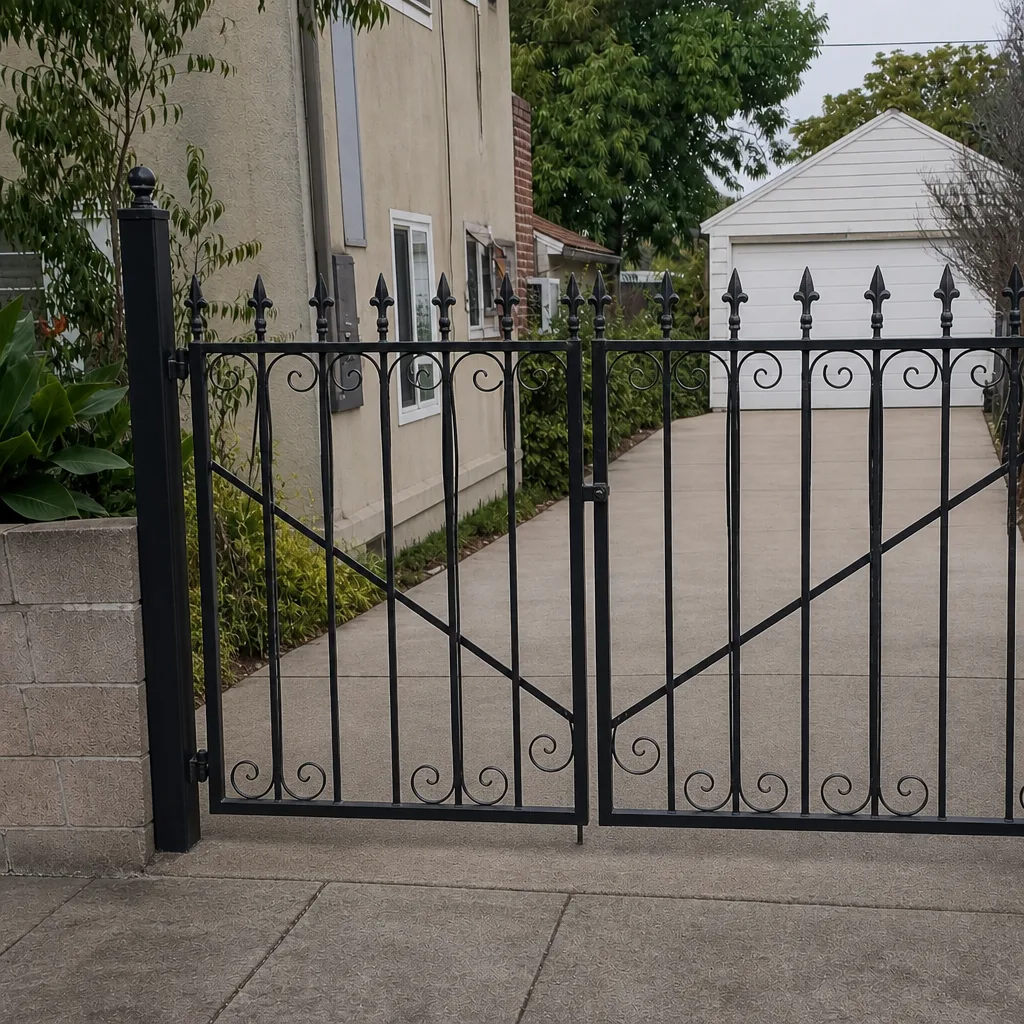
See the difference
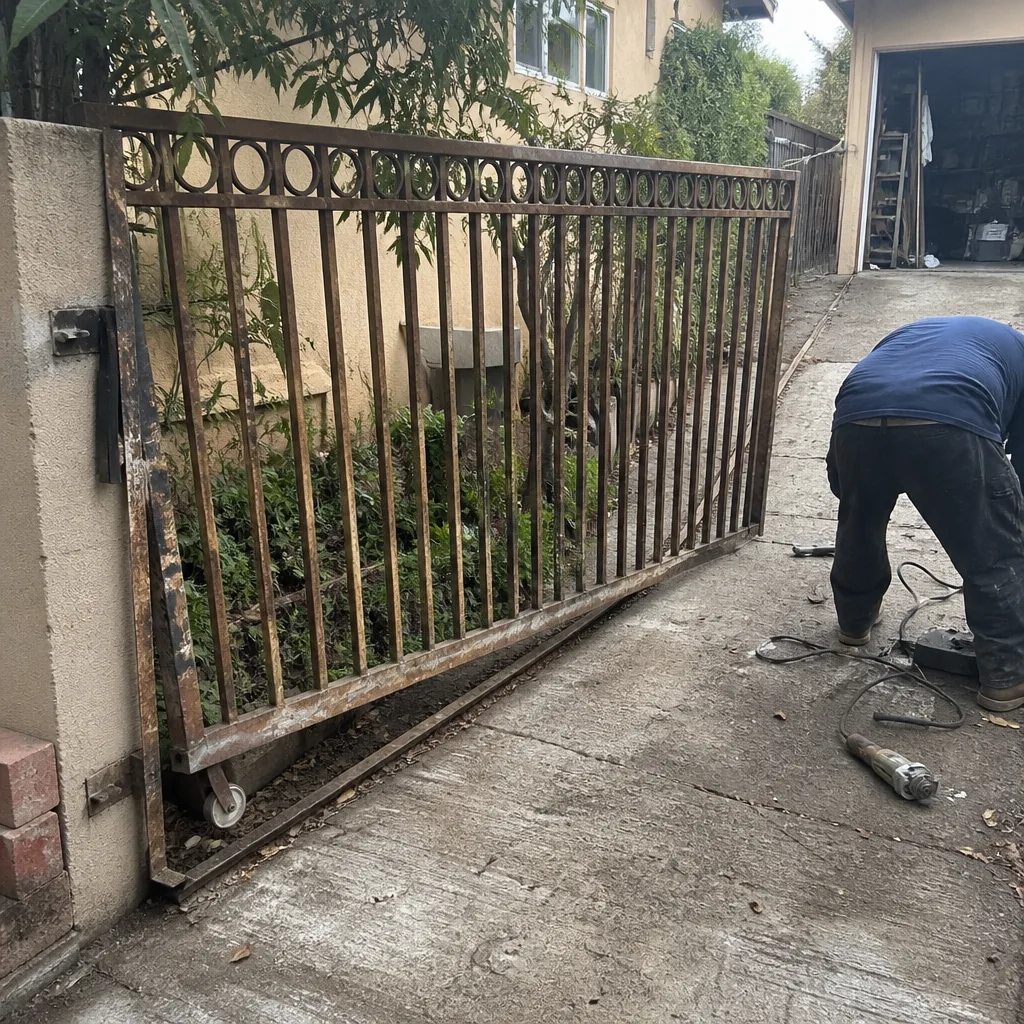 Before
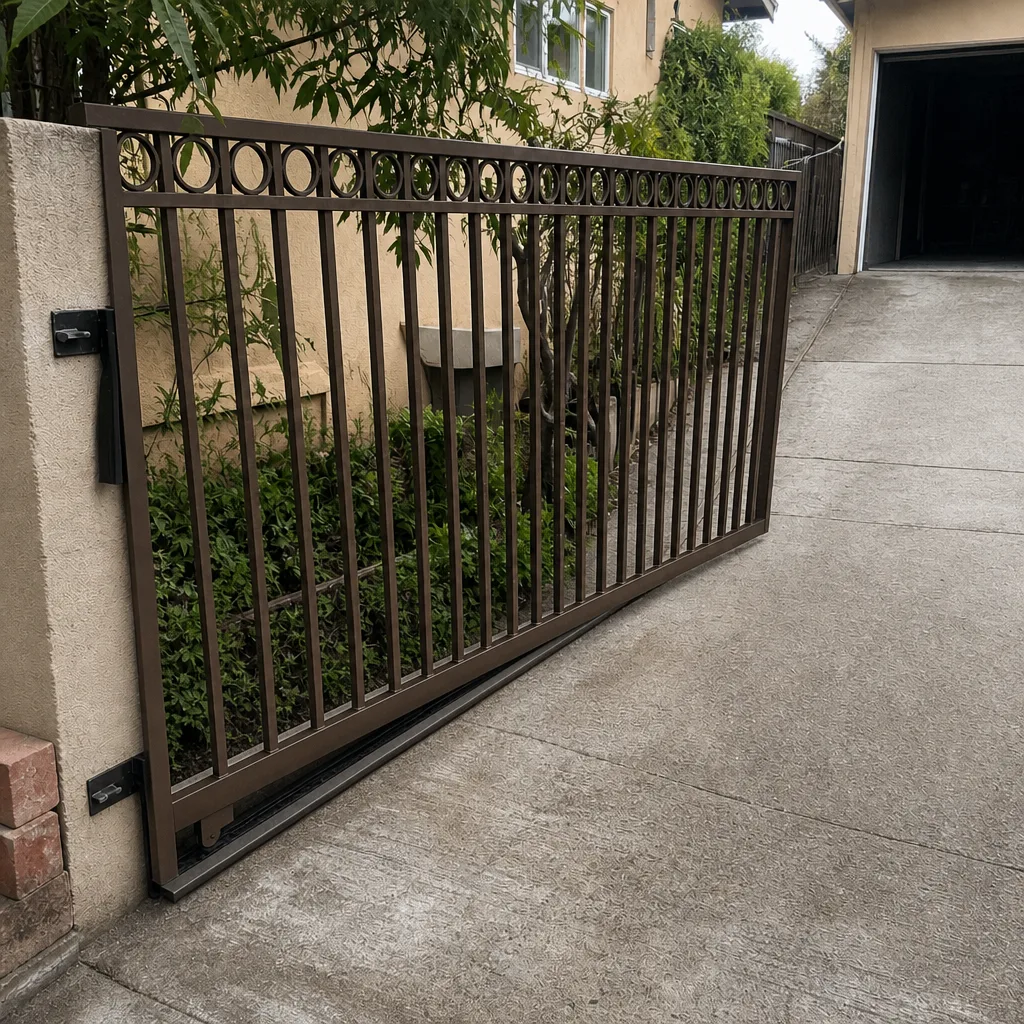 After
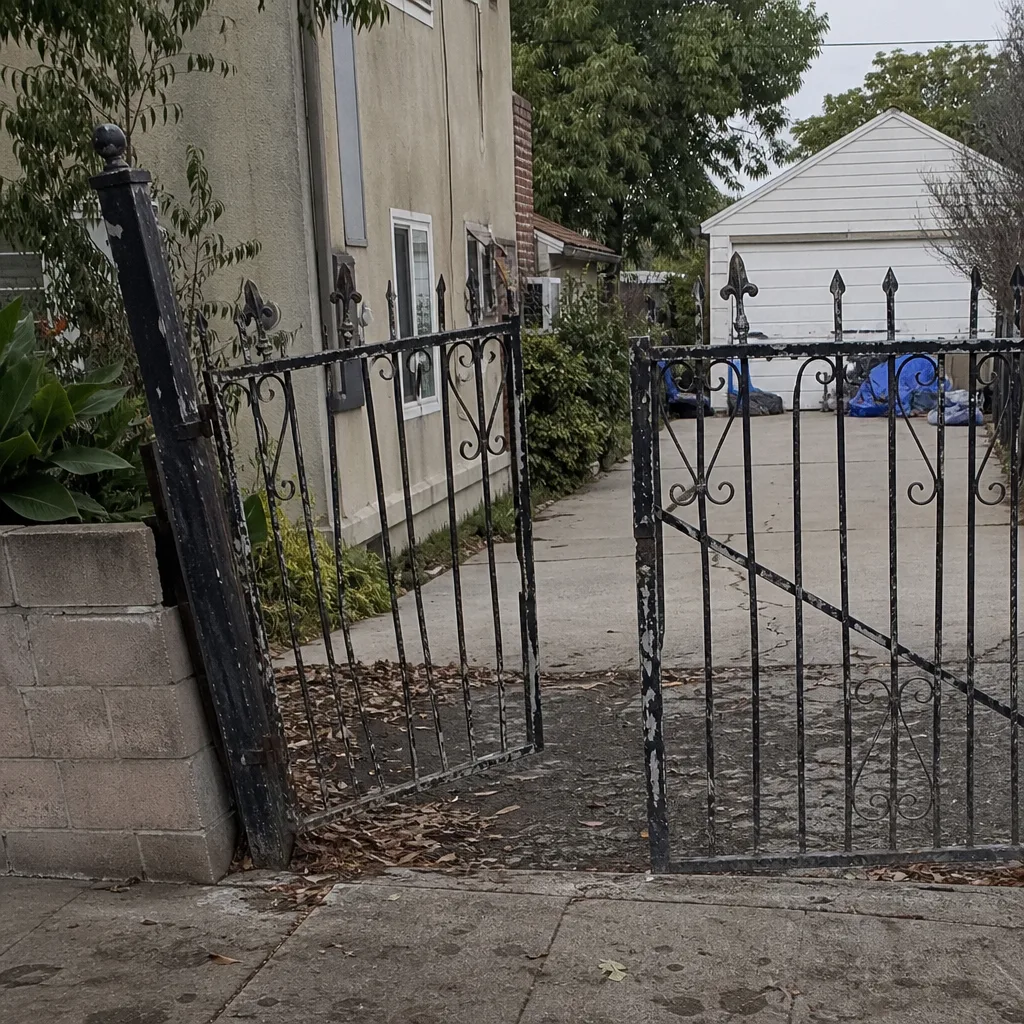 Before
 After
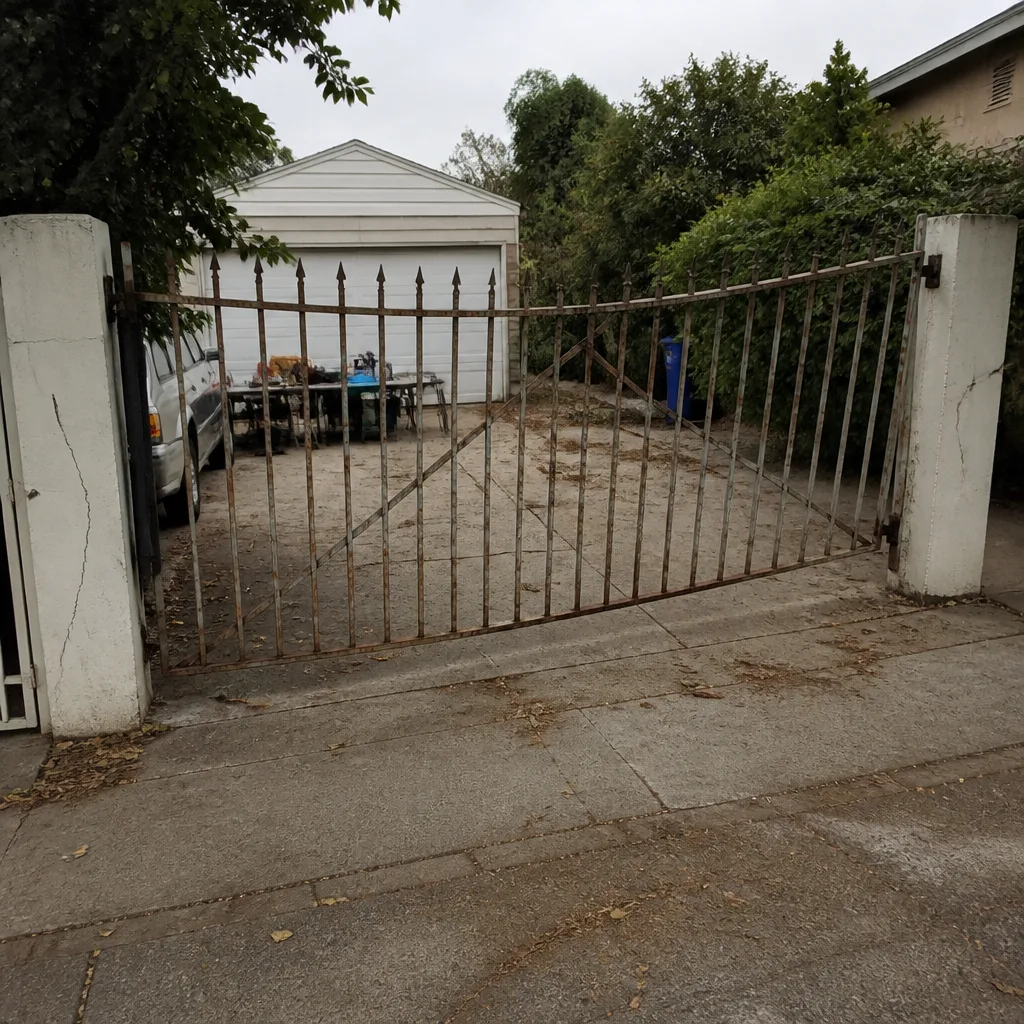 Before
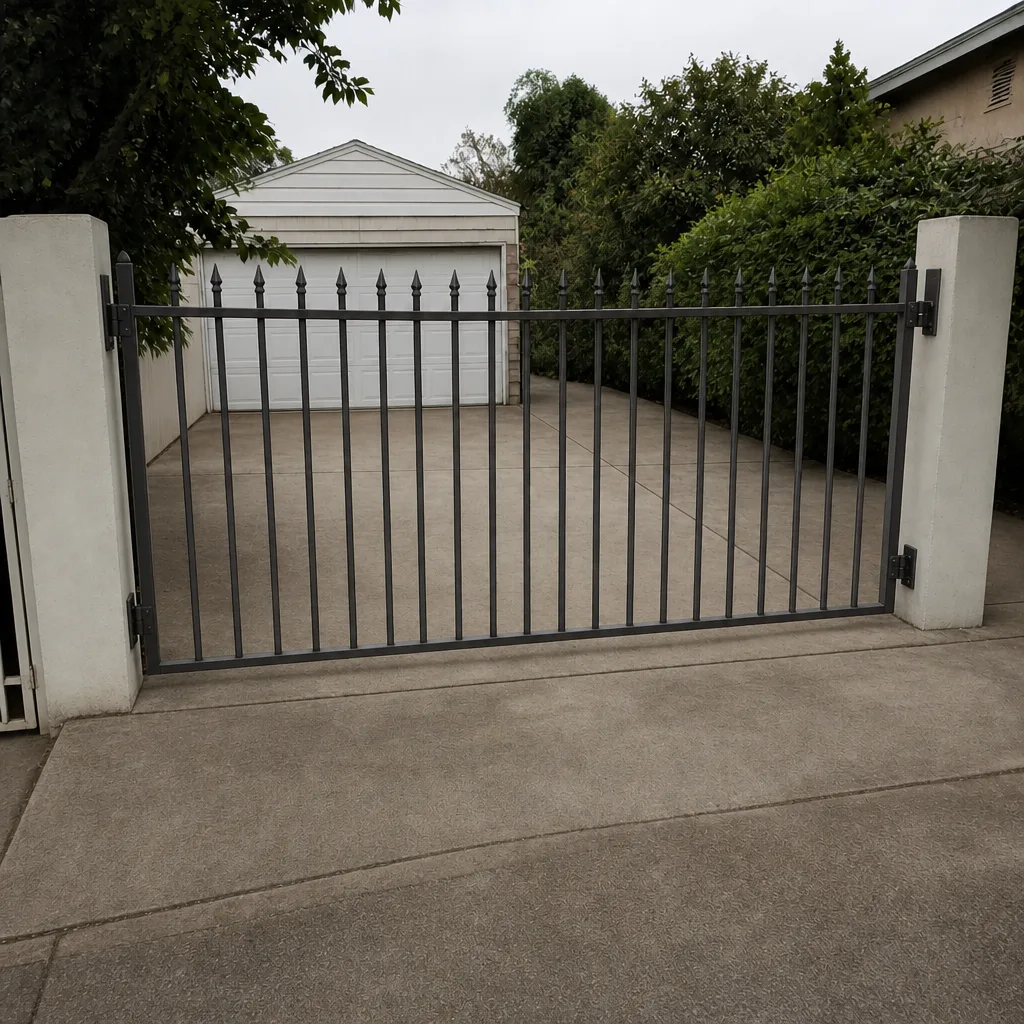 After
Frequently Asked Questions
You can safely program remotes, replace transmitter batteries, clean slide gate tracks, visually inspect moving parts, and lubricate hinges and rollers with silicone spray. Anything involving the operator’s wiring, safety reversal force settings, or heavy gate panels should go to a professional.
Gate repair costs vary by the specific failure. Simple fixes like remote programming or a track cleaning sit at the lower end, while board replacement or operator installation runs higher. The written estimate sets the final price, and it’s always free. Call (877) 752-2593 for an exact quote on your gate.
No. The reversal force setting is a UL 325 compliance parameter, and adjusting it without the proper test equipment creates a crush hazard and potential liability if someone is injured. This is the one adjustment we tell every Atwater Village homeowner to leave alone.
In most cases, yes. Manufacturers including LiftMaster, FAAC, and Elite state in their warranty terms that unauthorized repair voids coverage. If your operator is still under warranty, a DIY board or wiring repair will likely cancel it.
The most common issues we see are worn slide gate wheels, failed photo eyes, and dead remote batteries. The dry, dusty conditions around the LA River corridor accelerate track buildup, which contributes to wheel wear on slide gates.
This is where the cost of being without a working gate should be weighed carefully. We answer 24/7. Fast dispatch from 7am to 7pm, Sunday through Friday. Same-day service is often available in Atwater Village. Call (877) 752-2593 and we’ll get you moving again.
The Bottom Line
The DIY-versus-professional gate repair decision comes down to safety systems, not skill level. Remote programming and track cleaning are fine for any Atwater Village homeowner. Reversal force adjustments, wiring work, and structural repairs are not. The UL 325 standard exists because automated gates can injure people, and California law holds owners responsible for keeping their gates compliant. Add in the tool costs that erase DIY savings and the warranty implications of unauthorized repairs, and the sensible path is clear: handle the simple tasks yourself, and call a specialist for everything else. That keeps your gate safe, your warranty intact, and your driveway accessible.
Written by the team at Gate Repair Atwater Village, serving Atwater Village since 2012.